The Plastic Sea: the ethics of translating lived experience into action
Art Activism
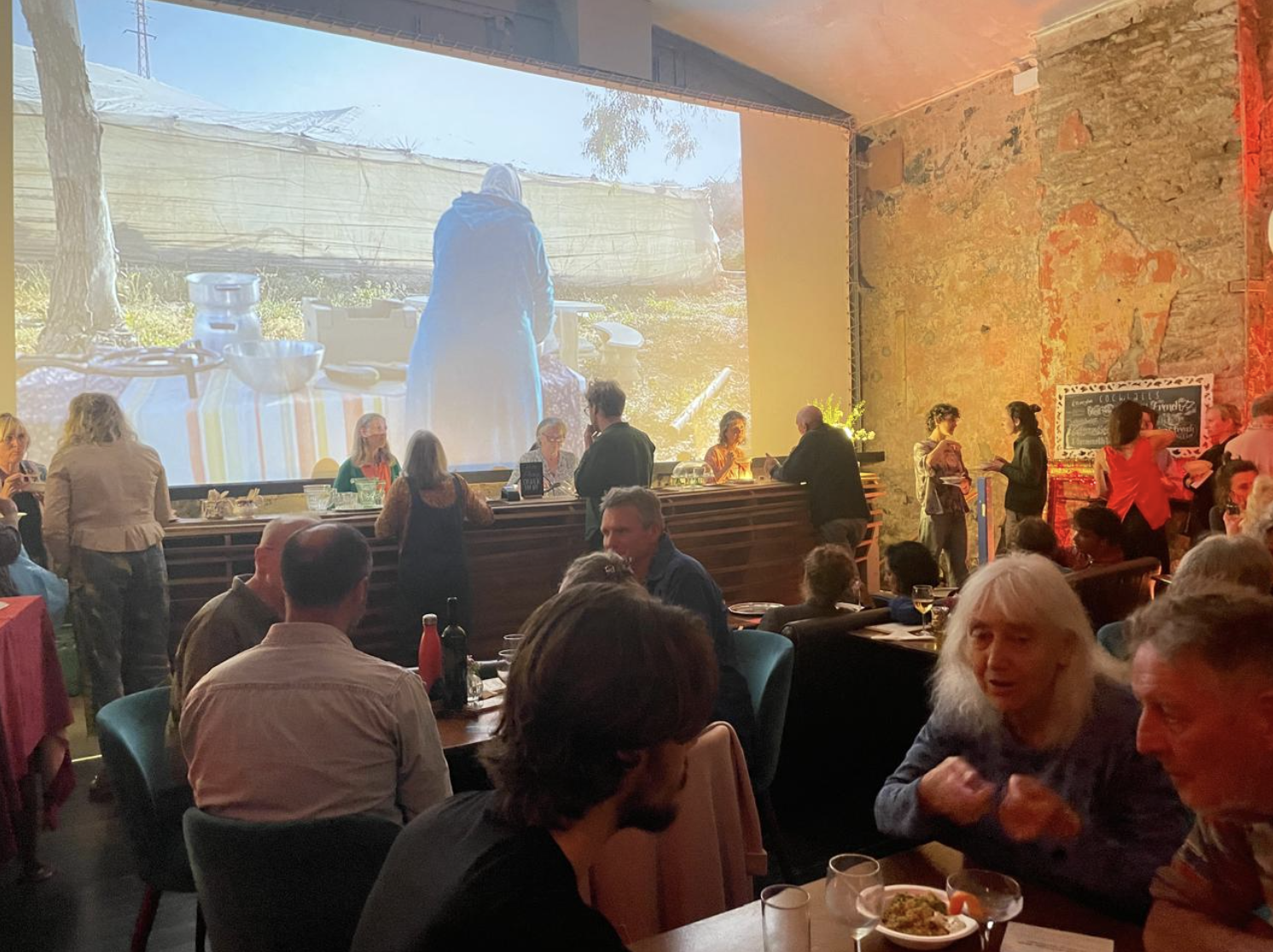
As part of being awarded the Schumacher Society Research in Action Fellowship in May 2025, I ran The Plastic Sea, a public event at Totnes Cinema in Devon, UK.
I served couscous ‘Fatima style’ to the audience, echoing the warm hospitality I receive from my friend Fatima, a Moroccan farm worker, when I stay in her humble home amidst the greenhouses of Almería. Four performers narrated stories drawn from the lived experiences of Fatima and other migrant farm workers. We screened a short arts advocacy documentary, Life under the Plastic Sea. Conversation cards were passed across tables, inviting people to gently displace themselves and speak with a stranger.
These creative experiences were carefully curated to trouble how we relate to the stories behind our food. What mattered was not only what was shared, but how bodies were positioned in relation to one another: eating together, speaking across tables, sitting with strangers, staying in the discomfort of encounter. These choices were not incidental. They were the result of years of learning, through practice, what happens when action is not reflexive — when stories are told too quickly, when power is left unexamined, when form fails to hold the ethics it claims.
The design of the Totnes event was itself a consequence of earlier moments of rupture in my work: moments that exposed the fragility of trust, the re-entry of hierarchy, and the stakes of speaking across unequal conditions. The evening became an extension of my research in action — a site where insight had been translated into cultural form.
The event sold out, with eighty people attending, and raised £800, which was channelled back into migrant women’s creative and advocacy work. Audience feedback suggested that people learned not through data alone, but through encountering lived realities in embodied and relational ways. The event also led to invitations to present the work in food and farming contexts, to contribute to the documentary Beyond Borders, and to publish reflections in SLOP magazine. It is now feeding into plans to develop the work into a wider tour.
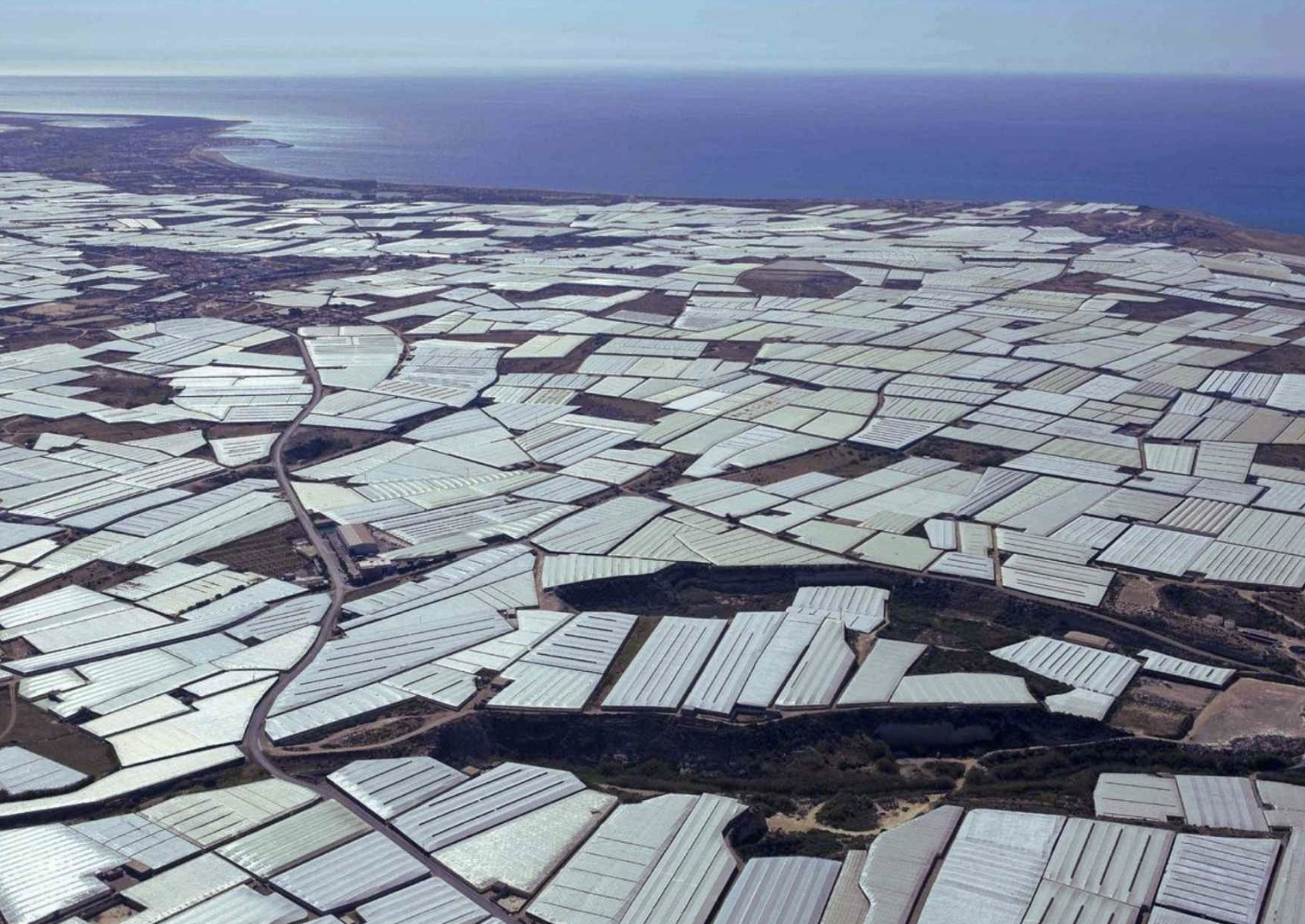
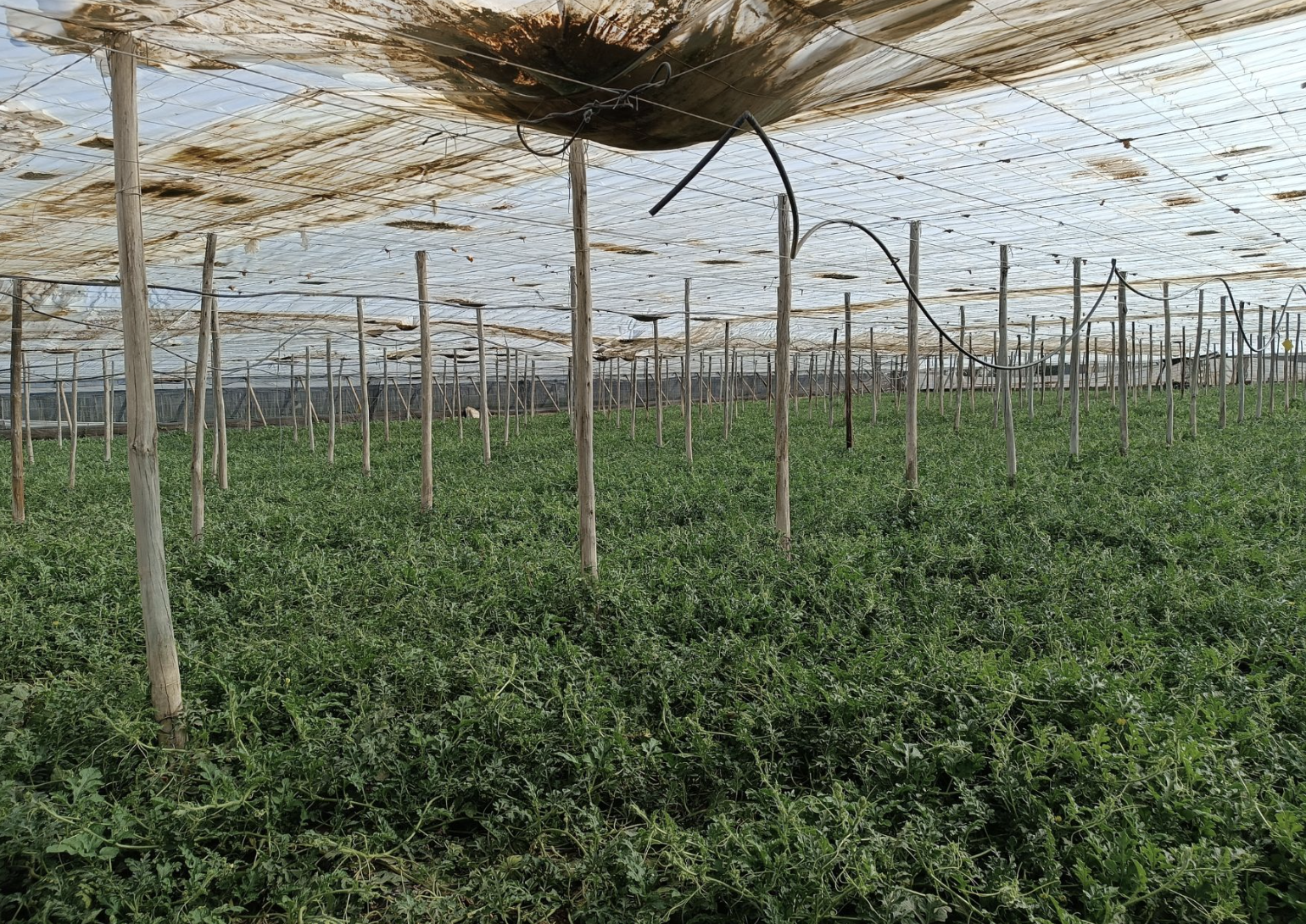
The event in Totnes grew from nearly a decade of research in ‘The Plastic Sea’ — the greenhouses that stretch across the southern province of Almería in Spain, where much of Europe’s fruit and vegetables are grown 1. It is an area so vast it is visible from the moon. The Plastic Sea gets its name from the shiny surfaces of the greenhouses, which glisten like the ocean. The majority of the tens of thousands of workers are people who have migrated to Europe and find themselves vulnerable to exploitative labour conditions. People risk losing their job, home, and residency if they speak publicly about violations of labour rights. This keeps a highly complex socio-political system in play.
At the heart of my inquiry is the challenge of making meaningful connections between our lives and the lives of those who sustain us — but who often remain invisible. Specifically, I am interested in how the experiences of people who grow the food we eat can be translated creatively in ways that deepen awareness and responsibility without reproducing harm.
Fatima
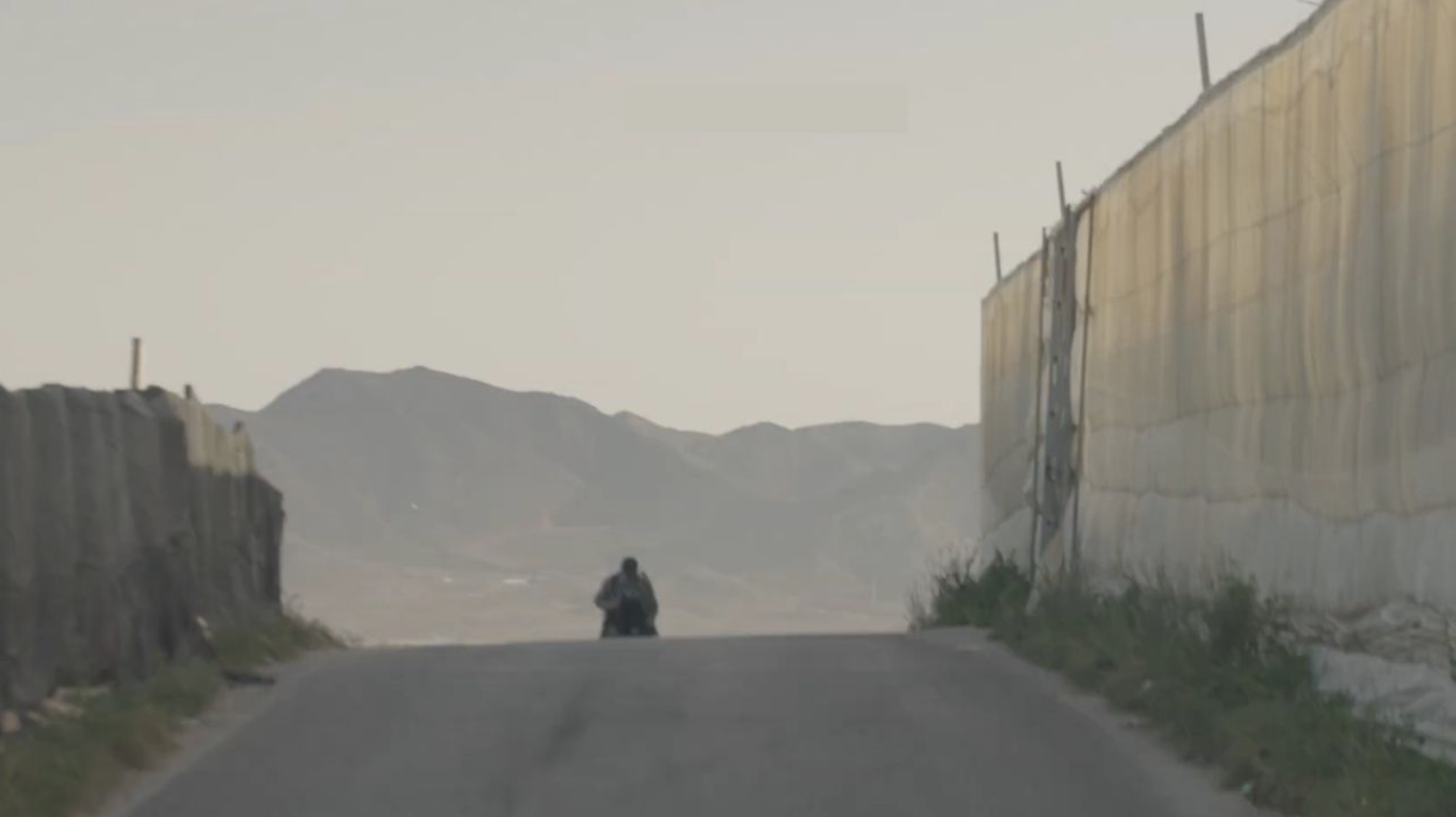
On a quiet stretch of road outside the small town of San Isidro in Almería, Fatima walks to work. Very few cars pass at that hour. She notices the stars, the night animals, the changing seasons. The moon is an important part of her walk. It reminds her of her faith. It reminds her of the beauty and sacredness of life. It matters because it is the same moon her husband is looking at — she is in Spain and he is in Morocco. It connects them, although they are both alone, as the moon is alone.
She hums as she walks — a prayer, a song from her youth, a lullaby for her children. It helps her ignore the pain in her knees and the sores on her feet.
My friend of six years, Fatima, is a woman in her fifties who has spent two decades working in Spanish agriculture. She is strong-willed and resilient. She lives in a one-room brick-built chabola and works hard. Fatima is one of many women whose friendship has formed the relational backbone of my practice. I visit her often. From our very different positions, we encourage each other to put our strategies for addressing exploitation into action and hold each other accountable.
She once told me about the moon on her walks to work — a story that inspired me to write a reflexive narrative. We developed it together, and many years later it became one of the stories performed during the event in Totnes.
I first went to The Plastic Sea nearly a decade ago when I was involved in setting up La Bolina, an association in Granada. I went with colleagues to visit friends who worked in the greenhouses. I started listening, in awe and in horror, to stories over shared meals. Relationships grew into collaborations and forms of research that were as much about friendship as they were about inquiry. What emerged was not a traditional ethnographic method, but something slower and more entangled — an embodied arts practice rooted in presence, reciprocity, and the textures of daily life.
The workshop
Over the last few years, I have held social actions and creative workshops with migrant women navigating some of the most precarious working and living conditions in Spain. We gather in a community space in San Isidro, a small town surrounded by greenhouses. We — artists, facilitators, friends, mothers — meet agricultural workers, survivors of trafficking, women seeking work or rest. We play. We move. We breathe. We stand. We go slowly. Many languages are spoken.
Social Theatre here is not about performance, but about attuning to what emerges between us. The work often hinges on tiny shifts — a breath, a pause, a change in rhythm. In one workshop, we play a simple walking game. A woman walks to the centre slowly and stands, facing the others. Another joins. Then another. Then it is my turn. Often this kind of exercise quickly becomes repetitive, even silly. But on this day something shifts. We move beyond boredom into shared attentiveness. The air changes. The group drops into a new rhythm — beyond technique, beyond identity. A shared tempo. An ensemble choreography.
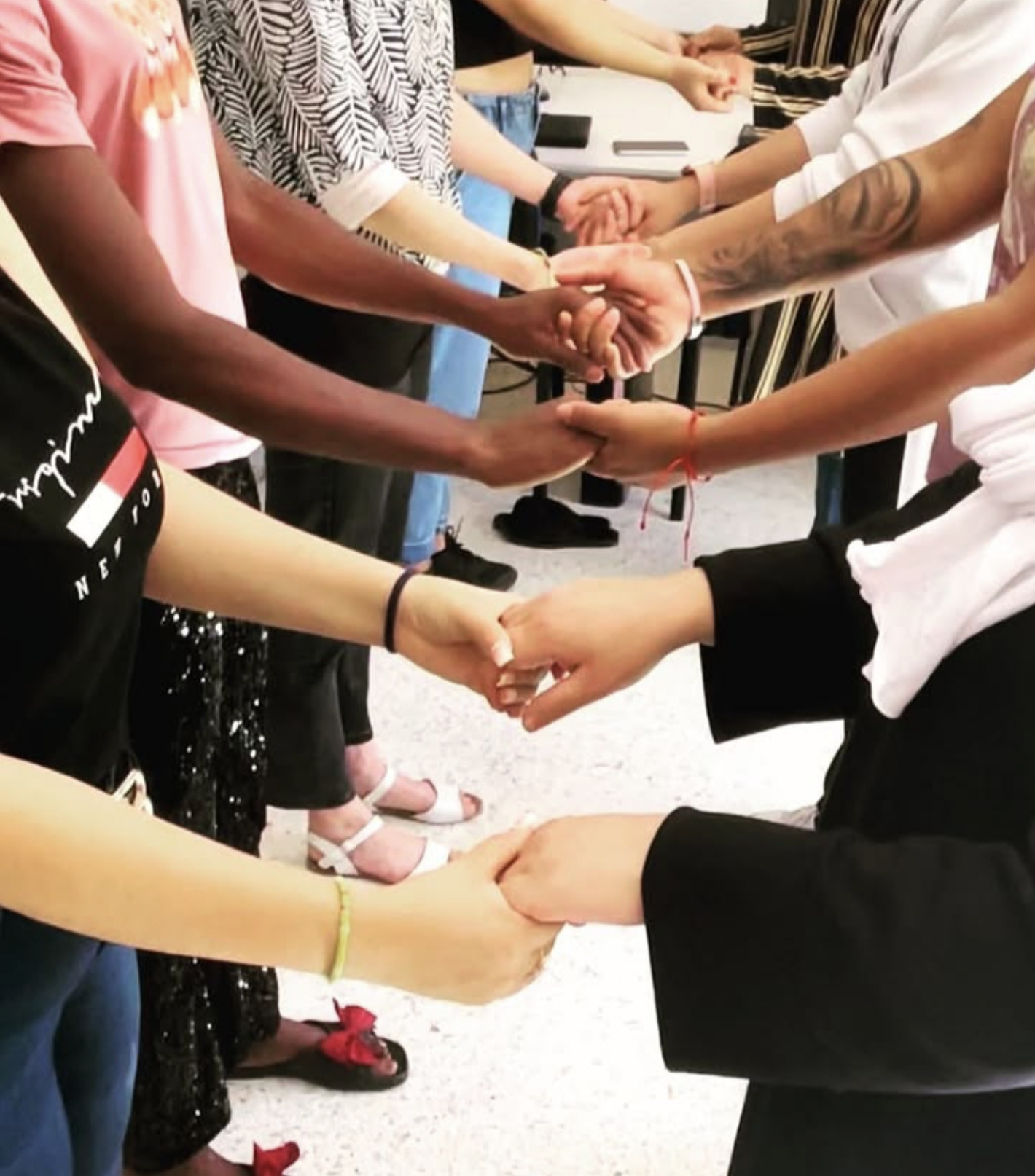
In this state, what a body can do changes. We awaken to each other and to something larger than any individual intention. This matters because social action is not only shaped by what we think. It is shaped by the quality of attention we are able to sustain together, by whether a space reproduces the logic of extraction or allows another mode of relation to emerge.
One afternoon in another workshop, I introduce an exercise called “machine of migration”. The phrase creates a sudden jolt. Body language changes. A long silence opens. Some people move to the edge and sit down — a clear statement that an exercise called “machine of migration” is not going to be the way into this issue today.
Where earlier we had simply been women together in a room, this term reintroduces the social categories and hierarchies that had briefly loosened. The systemic realities outside flood back into the moment. The rupture is not the word itself, but the sudden reorganisation of the social field it triggers — felt in posture, proximity, withdrawal and silence.
I have come to take moments like this seriously. Not as mishaps, but as signals. They show where wider systems of exploitation, racism, migration control and power are already alive in the room. In this case, the issue was not that migration had been named, but how it was named, by whom, and under what conditions of authority. Introduced by a non-migrant in a position of relative power, the exercise altered the ecology of the event. Outside hierarchies re-entered the space.
This is where reflexivity matters. If action is not reflexive, it can reproduce the very dynamics it seeks to challenge. It can mistake naming for solidarity. It can impose a frame rather than create conditions where people can enter on their own terms. It can harden power at the very point it claims to be undoing it.
The question in such moments is not how to fix the rupture quickly, but how to stay with it long enough for something else to emerge.
In this instance, a woman breaks the silence. She tells how she travelled to Spain by airplane on a work visa, which later ran out, leaving her stuck working illegally. She begins with the particulars of her own experience. Slowly, she brings in the experiences of others: those who walked across many countries, those who paid smugglers and crossed treacherous seas, those forced to come against their will. She acknowledges aloud what everyone in the room already knows but what was not being said. In doing so, she names the issue in a way that repositions authority. Those at the edges stand up and rejoin. Someone else shares their experience of crossing a border. The group finds another route into the topic.
By allowing the rupture to be named rather than smoothed over, the group reorganised itself. Authority shifted. Those who had withdrawn re-entered. The work changed course.
This is not a minor interpersonal detail. It is part of how I came to understand that the micro-ruptures that happen inside workshops are inseparable from the macro conditions of The Plastic Sea itself. The exploitation of migrant labour, the violence of borders, and the growth logic of industrial agriculture are present not only in policy or landscape, but in bodily response, in atmosphere, in who feels able to speak, and in how a room tenses or opens.
In my research work, I refer to The Plastic Sea as a geo-political rupture on a large scale: an environmental and human crisis exacerbated by slow violence. The ‘machine of migration’ exercise is a micro example of that slow violence, albeit on a different scale.
Consequences
One outcome of this learning is the development of a European-funded project with partner organisations also working with migrant women’s groups and labour unions across Europe. This project did not emerge simply from shared values or strategic alignment, but from insights gained through earlier moments of rupture in my practice — particularly where power, voice and authorship became visible as live tensions. Paying attention to these moments reshaped how I understood responsibility at scale.
The Art of Moving Forward became a translocal creative collaboration between La Bolina in Spain, Lesvos Solidarity in Greece, and the Theatre Pedagogues’ Association in Poland. The formation of the partnership itself became an ethical design question: who leads, who names the work, where decisions are made, and whose knowledge sets direction. The project was structured to centre organisations already embedded in migrant-led struggle, with my role shifting from initiator to facilitator of conditions in which others could lead.
These structural choices shaped not only the values of the project, but its everyday practice: how activities were designed, how funds were distributed, and how artistic advocacy was led and owned by migrant women themselves. One outcome was a manifesto calling for urgent, concrete changes in migrant women’s labour rights.
In Poland, that manifesto was publicly received by the Minister of Labour and Social Policy in an artistic action designed and led by the migrant women’s labour union. The ministry publicly replied. This mattered not only symbolically, but politically. It created public recognition of the intelligence, strength and agency of migrant women, and shifted who was visible as a legitimate political actor.
On 25 September 2025 in Poland, that manifesto was publicly received by the Minister of Labour and Social Policy in an artistic action designed and led by the Domestic Workers’ Commission of the National Trade Union “Workers’ Initiative” (Komisja Pracownic i Pracowników Domowych, Ogólnopolski Związek Zawodowy Inicjatywy Pracowniczej). The ministry replied publicly, thanking the union for its appeal, recognising the need for reform in long-term elder care, and linking the demands to ongoing legislative and coordination processes, including work on a long-term care law, quality monitoring, a spending review, and a proposed senior care voucher. This mattered not only symbolically, but politically. The workers’ demands received formal acknowledgement at ministerial level and were connected to concrete national policy processes around long-term care, labour formalisation, and improved access to services for older people.
Back in Spain, a small but vital demand from The Plastic Sea continues to be pushed for: the establishment of a public bus route between the greenhouses and the asentamientos, so people like Fatima do not have to walk for hours in the dark, alone, often after a ten-hour shift. A simple and actionable change — but one with major implications for safety, dignity and daily life. This demand is being actively advocated by SOC-SAT, whose work has been vital in drawing attention to conditions in the area. Municipal efforts, however, have focused more on removing chabolas than on providing transport connections. Meetings have been difficult to secure. Even so, the campaign has helped raise awareness among hundreds of local people about the urgency of transport access.
Ethics
My early attempts to speak out on behalf of others were criticised as extractive and unethical. I was asked: who are you to make performance work about the struggles of others?
That question reshaped my practice. As someone who has not experienced forced migration, I had to confront what it means to translate the experiences of others into public form. Over time, as Fatima and other women increasingly took the lead in making films and artworks, I began to understand my position differently. These women are not passive subjects. They are active collaborators. They have explicitly asked me to seek public attention as one strategy for change. And yet the power dynamics need to be continually checked: how decisions are made between us, how funds and resources are distributed, who takes risk, and who benefits.
When Fatima told me about the moon, at first I simply listened. I did not document it; the moment felt too intimate. But the image stayed with me. Some weeks later I asked whether I could return to it — as a poetic way of connecting others to a human story otherwise obscured by distance. She thought for a long time. Then she said yes.
When I wrote a first draft of what became the monologue, I read it aloud to her. I asked: does this feel true to the feeling? She made a small correction. Consent here was not a single transaction. It was ongoing and relational. To my performers, the direction was to stay raw and not over-dramatise the narratives, so that they might open a sliver of connection for audiences across physical and circumstantial distance.
Fatima’s story is not a case study. It constitutes the parts of her life she is prepared to risk sharing publicly in order to make something systemic visible.
It is not always so clear-cut. Many years ago I experienced a charged encounter inside a greenhouse. A worker shouted, in response to the presence of myself and the group of arts activists I was convening: “I HATE THIS PLACE. IT’S LIKE A FUCKING PRISON. WE ARE SLAVES IN HERE.” It marked the beginning of my thinking on rupture at the bodily and relational scale. The person left the greenhouse, and although I tried to find a way to make contact, they never answered the number I was given. There was no chance to seek their consent to share their words.
I was left to decide how to carry this experience. That decision has never felt clean. I have tried to carry it with care, while also critically reflecting on how it occurred and what it exposed — about the conditions inside the greenhouse, about the impact of our presence as artists, and about the unevenness of who gets to turn such moments into public knowledge. Choosing to write from such moments poses deep ethical dilemmas.
This is another reason reflexivity matters. Treating rupture as a source of insight — something to be noticed, analysed, or learned from — can itself become extractive if the conditions of who benefits from that learning are not made explicit and accountable. In contexts shaped by inequality, it matters whose discomfort is being metabolised into knowledge, and for what ends. Without this attention, even well-intentioned reflective practice can quietly reproduce the very dynamics it seeks to interrupt.
A further challenge lies at the other end of the process: how to translate the severity of the situation in a way that stirs genuine engagement in an audience. Over years of prototyping writing and performance, I have learned that content alone is not enough. Many early attempts left audiences feeling accused about their consumption choices, or despondent at the magnitude of the problem. At other times, people told me it was hard to engage because I was so angry.
At first, this made me want to be even more unapologetic. But I have learned to take seriously the creative risk of exposing a situation that may be deeply unsettling. Now I prepare the audience to enter a reality that is not theirs — not as voyeurs, but as witnesses. As the creator, I hold responsibility for shaping that encounter. But audiences, too, are responsible for their part. This mutual accountability echoes from the greenhouses to the cinema space, from the manifesto to the actions of those in power.
After the Totnes event, people told me they were disturbed, moved, unsettled. One person said, “I thought I understood this issue — but I had never felt it like this.” Another said, “I left with a question I can’t stop thinking about: what does it mean to be part of this system, and what could it mean to resist it?” They understood that simply refusing to buy fruit from the region was not enough. At the same time, this work continues to face a familiar challenge: this is not a popular or mainstream topic. It remains difficult to fund, and difficult to evidence impact in conventional terms.
Many of the experiences I have shared here may seem slight compared to the impossible magnitude of The Plastic Sea. But they are not slight in their consequences. They have shaped how workshops are facilitated, how public events are designed, how partnerships are structured, how creative work is made accountable, and how migrant women’s demands travel into public and political space. They have altered not just what I think, but what I do.
Developing a creative, embodied methodology in a context as harsh as The Plastic Sea has required a persistent belief: that what we pay attention to is what we change. In my field of practice, this work contributes a way of recognising discomfort and rupture not as failure or disruption to be managed, but as situated intelligence — guiding ethical shifts in how social action is designed, led and made accountable.
Because as much as these injustices are systemic, they are also intimate.
Like the moon,
there above us all — yet
seen, felt, and held
differently
by each of us.
1 More info can be found on the Ethical Consumer website- https://www.ethicalconsumer.org/ethicalcampaigns/time-with-produce-workers-Spain