Existence Is Collective
We live in a time of contrast: ecological destruction goes hand in hand with growing ecological awareness. Do we need a crisis to wake up? Modernity was shaped by the idea that humans are the highest developed beings on this planet. It seemed obvious that humans therefore had the right to use the planet to their own liking. We use the globe as a huge ball of resources rather than perceiving it as a web of entities. Today, we live in-between epochs, no longer in modernity, but at the beginning of something new. We realise that we cannot continue to live in this anthropocentric manner.
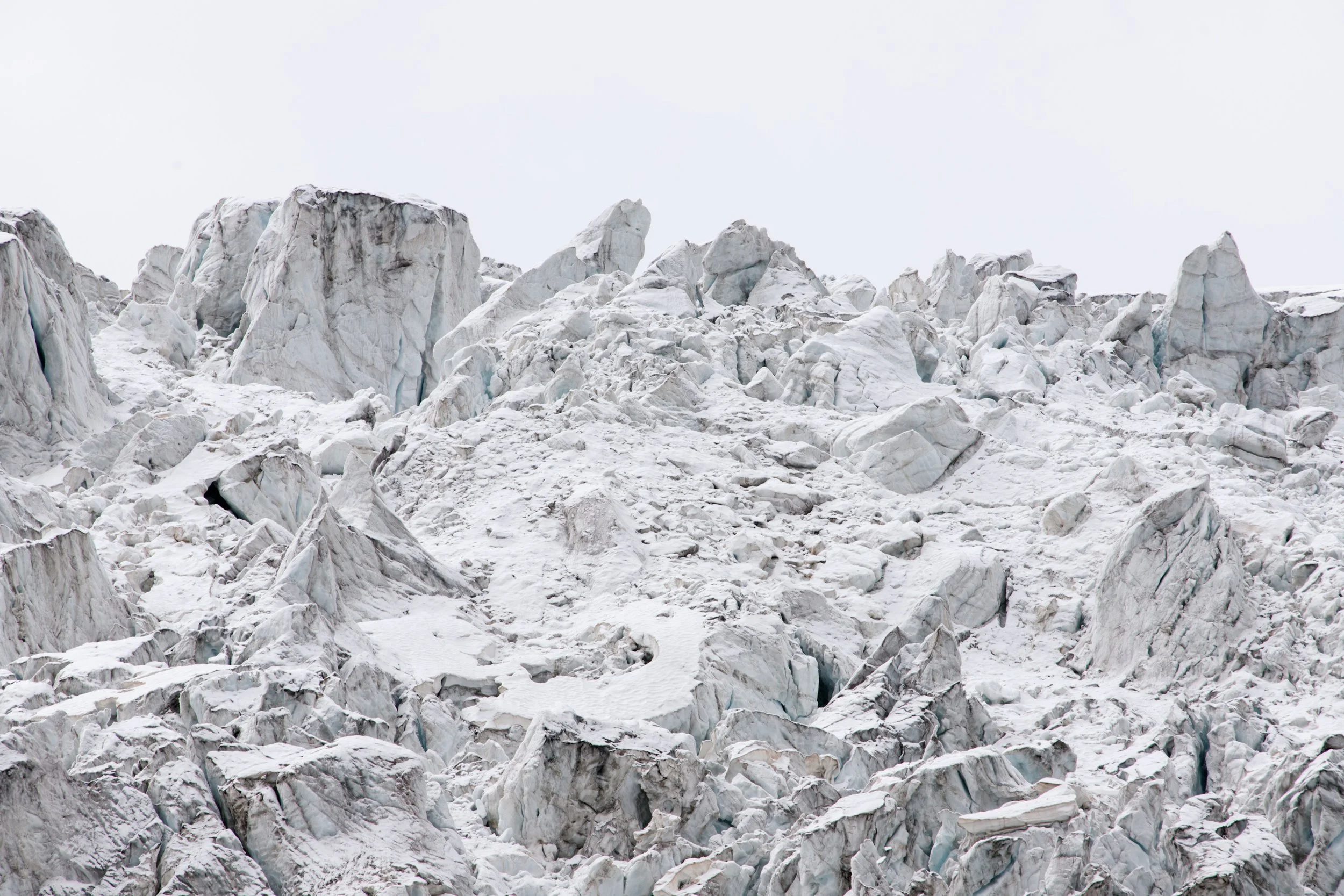
It's no surprise that the exploitative way of life we are leading puts great strain on the complex web that allows for life-friendly conditions, to a point where we put our own existence at risk. The air we breathe, the food we eat, even the complex organism that we call 'our' body is not simply a given, but a consequence of plants, animals, fungi, bacteria, minerals, water, and all other entities constantly interacting, communicating, pulsating. An ever-evolving interweavement. In the Gaia hypothesis, James Lovelock and Lynn Margulis address the aspect that organic life maintains the optimal conditions for its own existence. The chemical state of an atmosphere says a lot about its vividness: the earth's atmosphere is in an extreme chemical imbalance. It contains far too much oxygen for methane to exist. A mixture of these two gases is extremely reactive – they could not coexist in such high concentrations unless their levels were actively maintained. This also applies to numerous other gases. [1] A consequence of an entangled web of active entities.
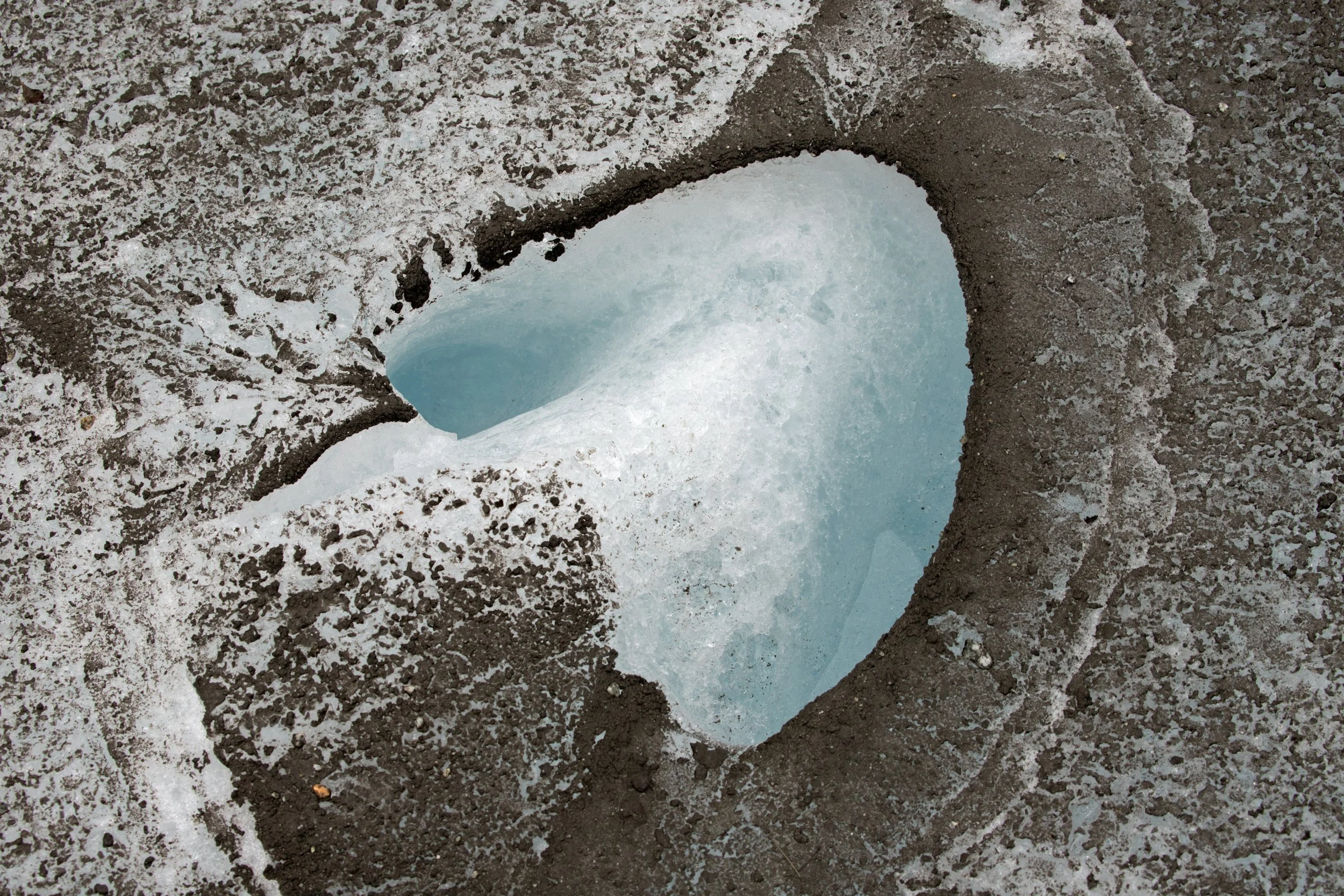
Embracing interwovenness means realising the planet is not simply ours to use. It means there's no way out of here. We do not have to become ecological – we are ecological just by existing. [2] We have never not been part of the universal web. That's what existence is all about. Bruno Latour describes it this way: being a subject doesn't mean acting autonomously in an objective frame. Being a subject means sharing one's impact with other subjects. [3] We do not have to "go back to" or "become one with" nature – expressions like these just demonstrate how distorted our view is. We are not disconnected. One could even take it as far as to say that separation is a concept per se: every form of existence is deeply interwoven with all other existences, so deep in fact that separations become sheer categorisation, conceptualisation, simplification, born of the human mind. In that sense there is no ‘background’ or ‘neutral space’ that we humans move around in. There are only protagonists; every form of existence has its own dynamics and therefore shapes and interacts with all other beings, and every protagonist has its own temporality. Think of the motion of the sun entangled with the Milky Way, the dynamics of the climate, the yearly cycle of a beech tree, the burst of a lightning – or the flow of a glacier.
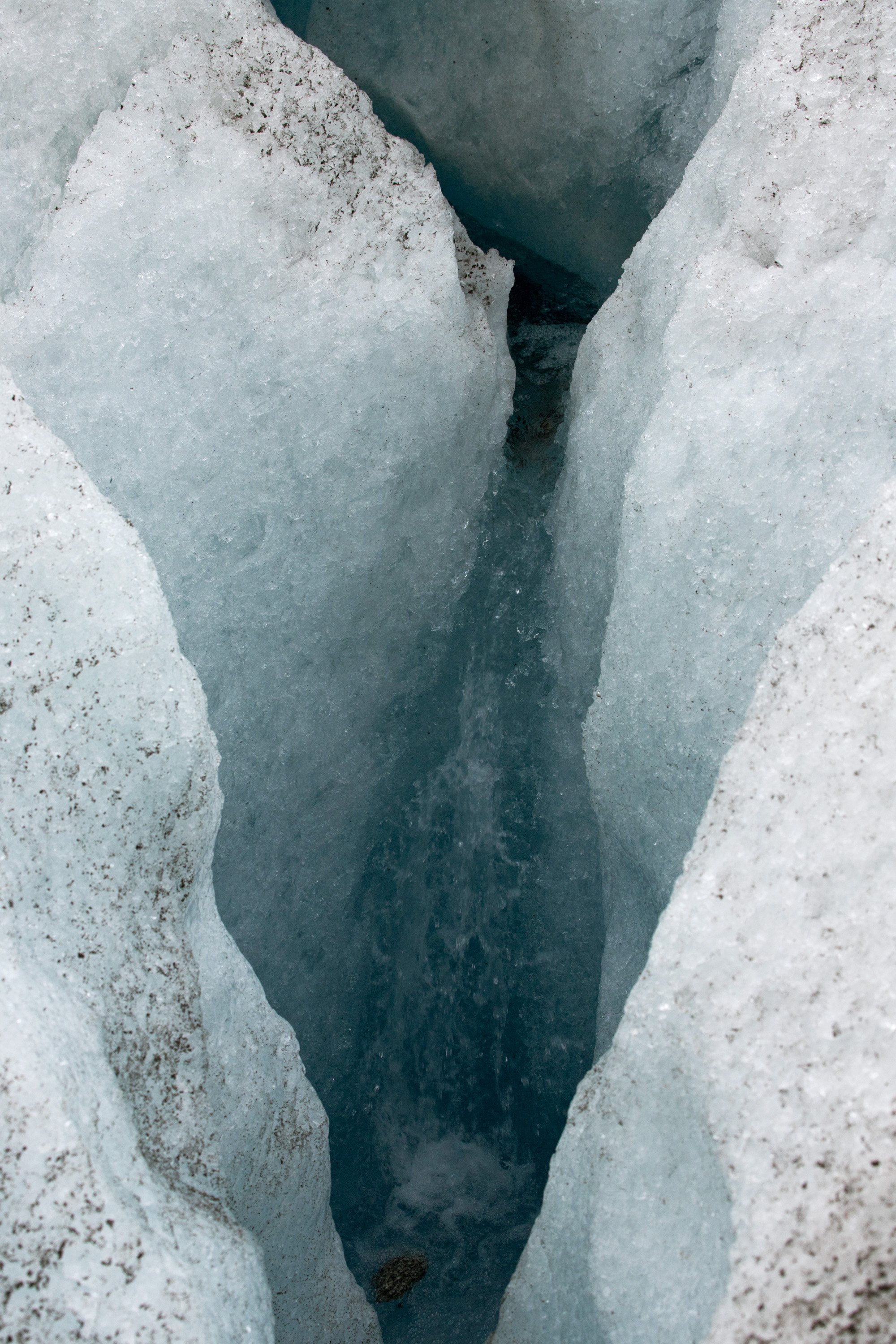
See the problem with saying, "I like spending time in nature"? It implies that nature is something that you can go in and out of. Nature isn't a place you visit on the weekends. The concept ‘nature’, as everything opposed to the human realm, is a terribly misleading notion, because it creates the two categories of 'humans' and 'everything-but-human', which is an anthropocentric distortion. If we now proceed on the assumption that there are only protagonists, then we can apply our definition of life to – yes – everything: the mountains, the climate, the solar system. They are all entities, but so vastly different from us that we can hardly grasp them. How can you define a mountain as a 'being'? How do you know where the mountain ends and where the forest that grows on it begins? Where is the boundary between a forest and a tree? Just look at 'your own' body: 'you' consist of around 40 trillion microbial cells, that is bacteria, viruses, and fungi, in addition to the 30 trillion 'human' cells, which in turn evolved through symbiogenesis of previously free-living procaryotes (single-celled organisms without a nucleus). [4] So really, where do 'you' begin?
Water is a staggeringly mysterious entity. The power in this molecule is immeasurable – it is one of the very foundations of organic life. The biosphere is water to a large part. Water shapes the surface of the earth: oceans, rivers, lakes, clouds, plants, animals, fungi, bacteria. It's all water. Even the shapes of mountains and valleys are created by this vast entity.
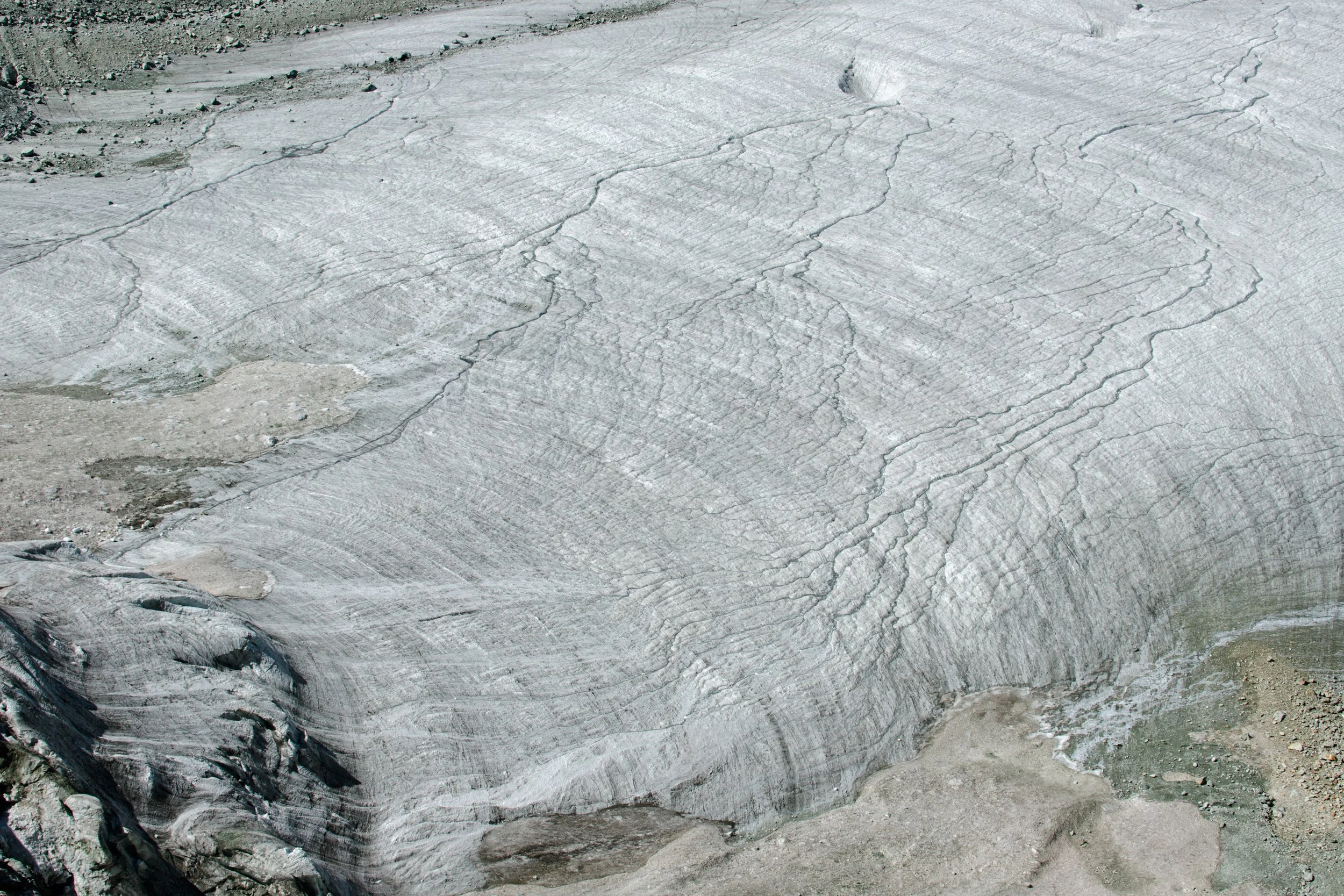
There is one more water entity that has shaped vast amounts of the landmass. Consequently we were and are all shaped by it: the glacier. With this book I want to explore this unique being that is extremely powerful and dynamic. Gently but determined, it makes its way over the surface of the earth. As ambassadors of climate change they have had a wide presence in media and art lately. We all know that the global glacier mass is melting away at an ever-increasing speed, caused by a warming climate. In Switzerland, 90% of the glacier mass will have disappeared by the end of this century. [5] As important as it is to show the correlation between climate and glaciers (and further, humans and climate), it is nevertheless a rather negative way of addressing the climatological (and thus ecological) crisis we are facing.
It is common to point out this issue by showing piles of data of all the negative effects humans have on the planet: rising sea levels, extinction of species, or the melting of glaciers. The problem with data is that they are abstract and hard to decipher if you are not trained. Combine that with emphasising the detrimental ecological effects, and you will have a society in which some feel guilty for every little thing they do, others are confused, and the rest completely disengage because they think it's all fake news. The goal, in the end, is to find truly sustainable and respectful ways of being part of this web. It is an uncanny time to live in, and an uncanny realisation that there is no way out of here. That is exactly why we need empowering, energising, motivating, positive approaches to foster understanding and the intrinsic will for change.
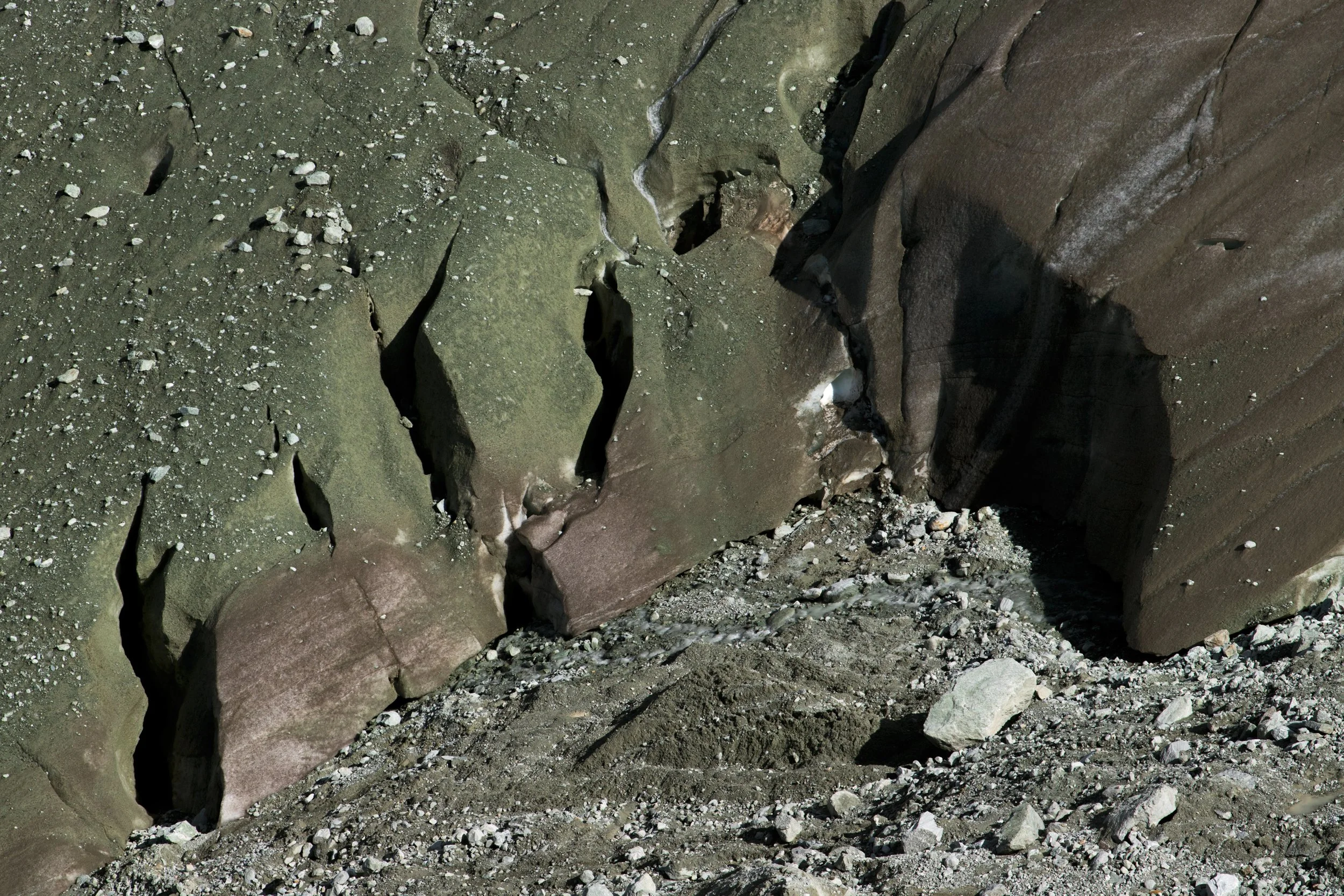
We must embrace that there are entities which we can hardly grasp with our mind and which are so vastly different from us that through our rational glasses we will never be able to see any kind of life in them at all. Drawing our attention to and connecting with the non-organic world is an important step toward a sustainable relationship as part of our planet.
My book, titled The Glacier Is a Being (2023), is an honouring to the mystifying ice beings. To their diverse ways of expression, the colours and shapes they take on. Their profound impact on this reality we experience. The way they manifest themselves to us. They really are so much more than chunks of ice on a mountain. They are uniquely dynamic, viscous like honey – and yet very brittle and, for human temporality, almost rigid. Each glacier is profoundly unique, since they are one with the mountain they are born on. The mountain makes the glacier, and the glacier makes the mountain. There are only protagonists; developing and entangled entities that play with each other and dance together to become their counterpart.
References
Lovelock, J., Das Gaia Prinzip. Die Biographie unseres Planeten. Munich: oekom, 2021.
Morton, T., Hyperobjects. Philosophy and Ecology after the End of the World. Minnesota: University of Minnesota Press, 2013.
Latour, B., Facing Gaia. Eight Lectures on the New Climatic Regime. Cambridge: Polity, 2017, p. 84.
Margulis, L., Der symbiotische Planet oder wie die Evolution wirklich verlief. Frankfurt: Westend, 2017.
Swiss Federal Office for the Environment, Es geht um Schadensbegrenzung, 2020: https://www.bafu.admin.ch/bafu/de/home/themen/wasser/dossiers/magazin2020-4-dossier/es-geht-um-schadensbegrenzung.html