Three Portraits of Sharpham
1. SITUATING
I write this piece to show new ways of practice and thinking that I am cultivating in my work as an economist. This work is inspired by my PhD 1 research where I enquired into how the practice and thinking associated with both mainstream and alternative branches of economics overlooks the importance of lived experience, creating feelings of detachment in the economic practitioner as well as undermining the relevance and effectiveness of economics and policy making. My research develops a more responsive and reflexive approach to economic practice and thinking through tracking significant moments of experience through phenomenological observation and reflexive narrative. In so doing, I turn away from ‘analysing and measuring’ towards immersion in the experience of practising as an economist in different situations, observing and attending to detail, finding ways of showing others what was previously unnoticed, to bring significance to, and thus open the way for other pathways of action.
This article portrays my experience as Co-Chair of the Sharpham Trust 2. Sharpham is a charity that manages various historic and colonial buildings, and 550 acres of land in South Devon, England. The high-level vision is ‘to cultivate mindfulness and compassion and an environmentally sustainable world’. Sustainability remains at the core of the Trust and is a foundation for a programme of retreats, education, and events to cultivate mindfulness and compassion.
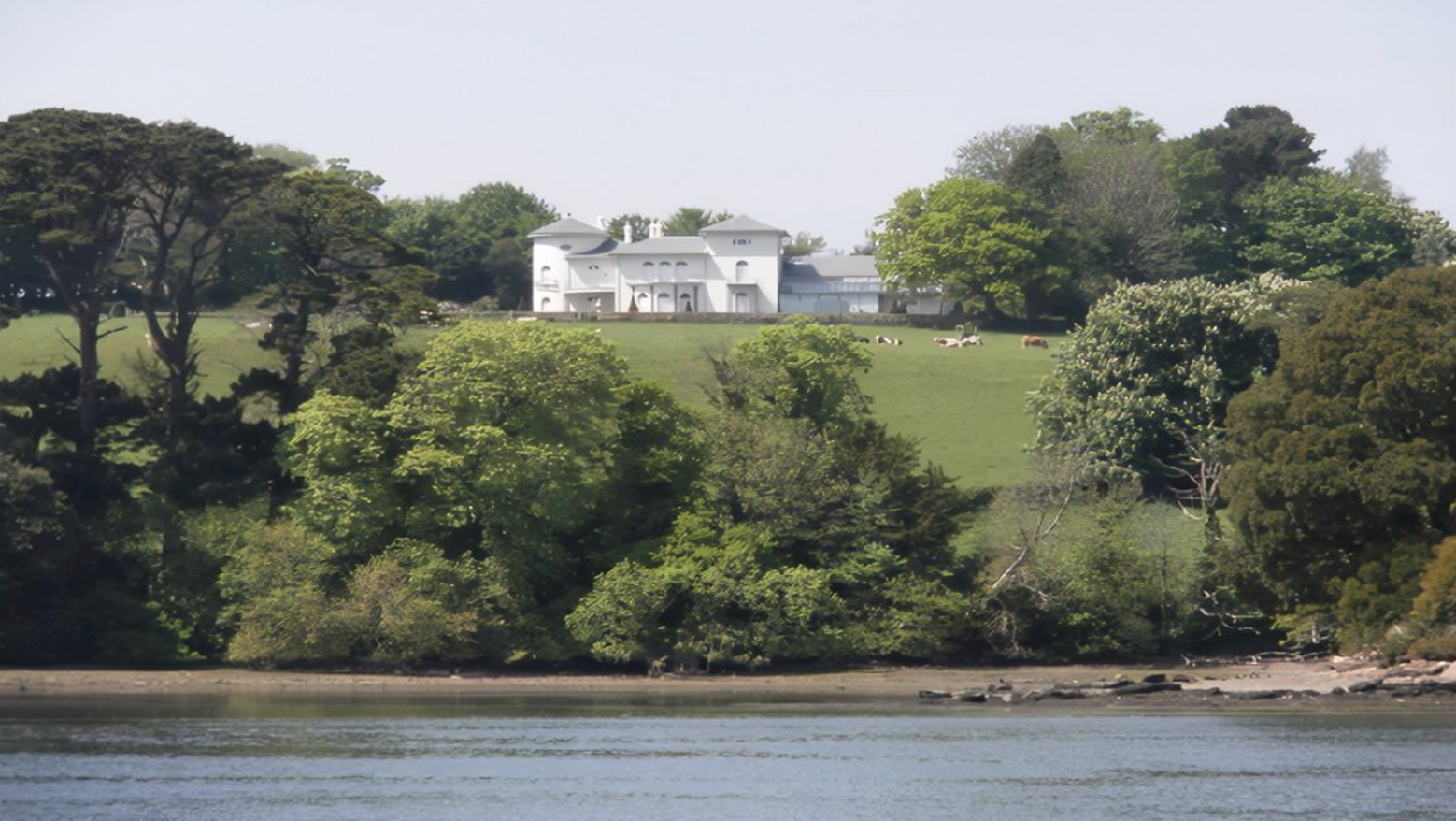
This article presents my experience of three different aspects of the work of Sharpham: Rewilding the Land; Decolonising the Estate; and Cultivating Mindfulness and Compassion. It is written in the form of three phenomenological portraits 3, showing the world as it is experienced by me, as an active participant rather than an objective onlooker. The intention of portrayal writing is to show the reader what you are seeing rather than to tell or explain. The writing does not simply re-present what is already there but rather is the medium by which meaning becomes manifest and is brought into expression.
Each portrayal in this article starts with an immersion in what is happening, tracking embodied experience, narrating the unfolding of particular striking moments, and weaving in different voices through reflexive iterations, to think with and reveal aspects that were otherwise invisible or not regarded as important. When done well it affects the reader and writer by evoking new understandings and perspectives.
2. REWILDING THE LAND
On a sunny afternoon in June, about twenty people gather to learn about the rewilding experiment on part of the Estate land at Sharpham. Our two guides start by asking us all to recall an early experience of nature in our lives. I note that starting in this way is an invitation to re-member vivid experiences, in contrast to starting in a more cerebral way with the facts and figures of rewilding. This we heard about in terms of the need for rewilding in order to reverse the trend of common UK species being critically endangered due to habitat change and loss. At the time, the statistics were shocking. But they did not stay with me and now, reflecting back some weeks later, I cannot recall any of them.
What I do vividly remember is the embodied experience of encountering the land directly. It was not easy to navigate this uneven ground, and I became fascinated with how it seemed to undulate underfoot. This created a clumsy stagger of a walk that mirrored the undulation through my posture and movement. My senses were heightened and attentive to small dangers, such as tripping in the thicket or being stung by large forests of nettles that had grown to my own height. I was forced to come to a standstill, completely surrounded by stinging plants.
On tiptoe, I peered over their verdant leaves with their fine white hairs to try and spot safer ground. A shimmer of yellow in an open glade seemed to beckon. The journey wasn’t straight or easy, but along the way, the luminescent shimmer became more differentiated to reveal clusters of daisies, buttercups, and dandelions. I found myself asking different types of questions, such as, ‘Why do yellow plants seem to collect together?’
When the group finally assembled, people had other curiosities. Why do so many moths gather on a particular flower and not on another of the same species? Some people were thirsty for explanations about the rewilding strategy. Was there a plan for tree planting or was it left to natural seeding? And then there was this which I paraphrase from memory:
‘I find myself being horrified by all the weeds and all the ‘messiness’. I come from a traditional farming background, and this field is every farmer’s nightmare. At the same time, I am an ecologist and welcome this diversity that provides habitat for a whole variety of much-needed pollinators.’
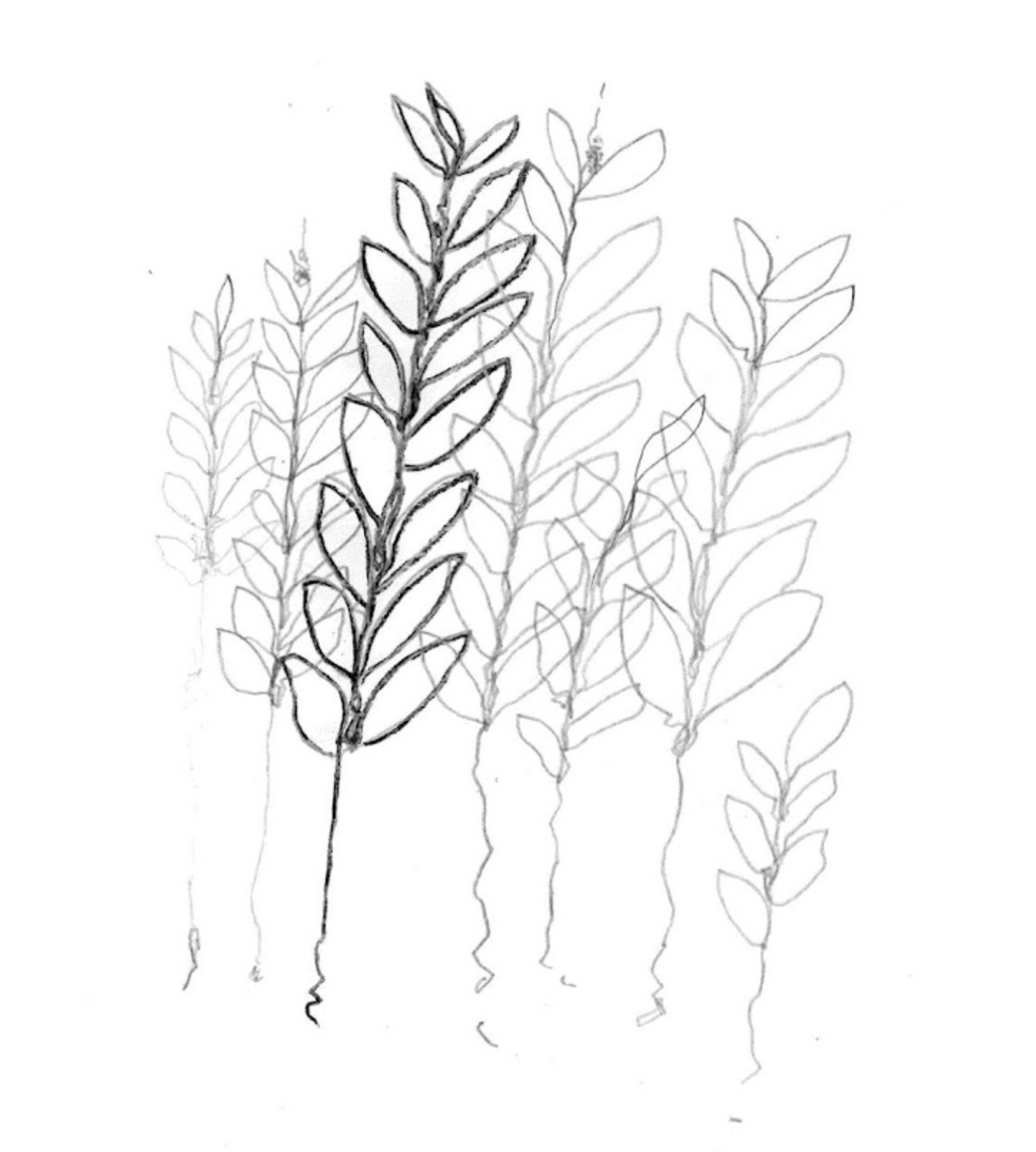
Returning again to our feet, we track behind each other as we trudge uphill in silence. Arriving at the brow of the hill, another perspective opens before us. Our guide explains that we are seeing three different types of land management in the mid-distance, sitting alongside each other. The field on the far right is farmed according to traditional agriculture. The land looks bare and sun-burnt, framed by a thin border of small trees and shrubs. Straight in front is an organically farmed plot. It looks green and lush, the border wider and extending into the field. On our left, is the rewilding area. The homogenous nature of the previous plots is broken with a mosaic of different colours, textures, heights. It has a sense of movement, mirroring the contours of the earth and the gentle breeze in the air. There is more interest for the senses here, and I find myself straining to experience the sound and scent of this visual cacophony.
Our guides offer scientific data to support their conclusion that the rewilding site is healthier and more resilient. I wonder if there is another way to experience these same conclusions through direct sense perception. I ask a question about how we might describe the qualities of the different land masses – say, in terms of aesthetics, vitality, and health, for example. I had hardly finished before someone else chimes in. Yes, and what about the sound landscape? What does that tell us? Her question takes me back to the soundscape in the rewilding site – a whole orchestra of clicks, whispers, buzzes, and snaps accompanied by a sharp sting on my ankle and then a bruising past something hard, dry, and cold. Our short meander was fully charged with sensory onslaught. How could we not notice? And how do we remain attentive to the absences which have become more commonplace – the deadly silence, the lack of fragrance or homogeneity of texture. Have we come to prefer structure and order over the entangled messiness of mutuality and relationships of give and take? Perhaps because we have few opportunities to encounter wildness, we mistake management and control for care.
3. DECOLONISING THE ESTATE
We had been going round in circles about what to do about the various ‘colonial’ artefacts and paintings in the main Sharpham House. This had been prompted by feedback from retreat leaders and participants about how the space did not feel welcoming to people of colour. Many colonial paintings and artefacts dominated the meditation space. Indeed, the whole history of Sharpham House and the surrounding parkland is deeply embedded in a colonial past that speaks of pirates and the financing of the estate with ‘prize’ monies awarded from capturing a Spanish ship sailing from Peru with a valuable cargo of gold, silver, cocoa, and tin (Fowler and Bernstock, 2025)4.
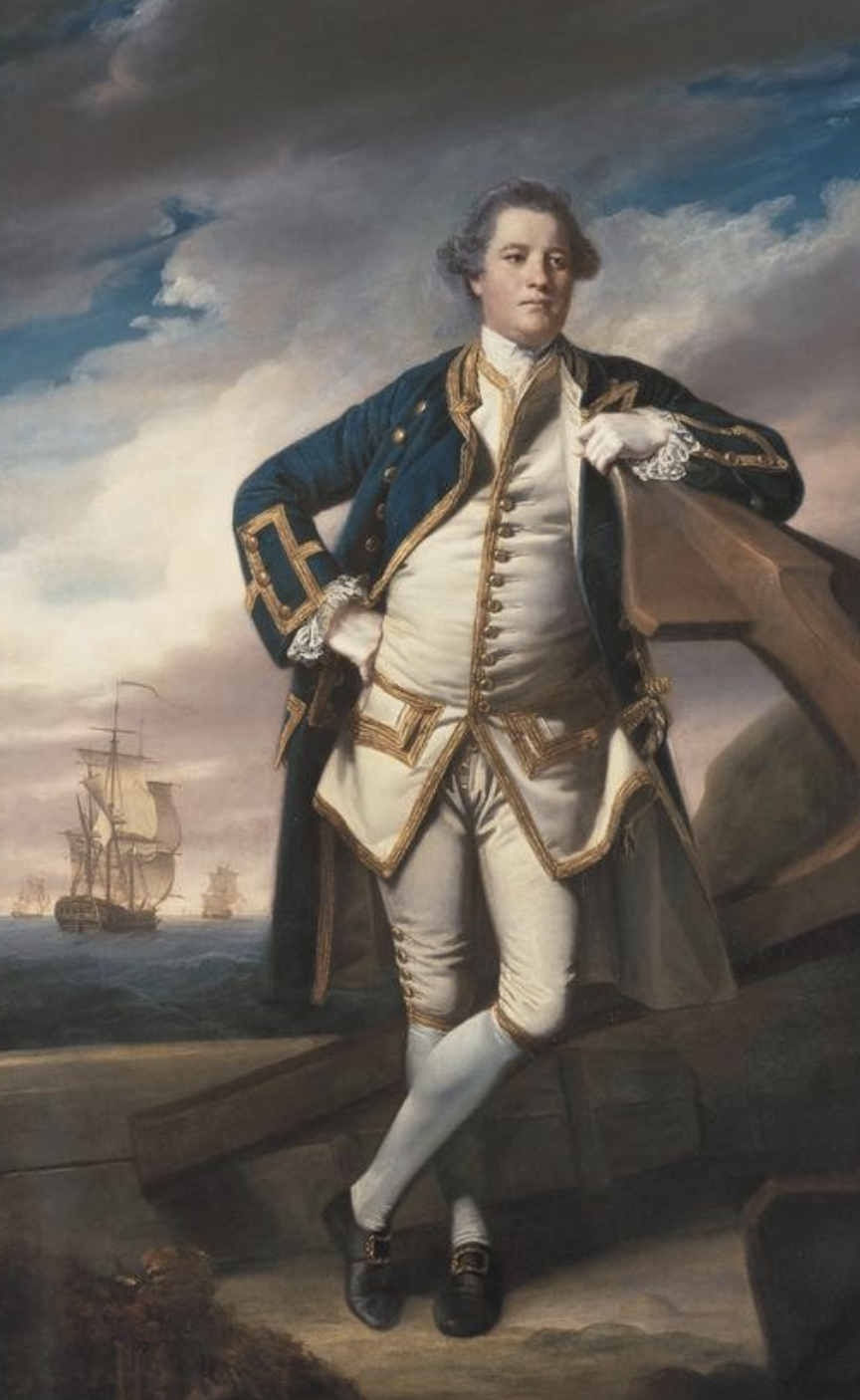
Captain Philemon Pownoll purchased and rebuilt the Sharpham Estate https://en.wikipedia.org/wiki/File:Philemon_Pownoll.jpg

The Equality Diversity and Inclusion [EDI] group of which I am a part, commissioned some ‘experts’ to facilitate a series of decolonising workshops for staff, teachers, and Trustees. The workshop began with a round of introductions. We then split into small groups to explore how we felt and what we thought about the colonial history at Sharpham. I was in a group of three and started first. My feet were rooted on the ground, and I spoke freely. Strangely, I felt uplifted that although Sharpham had a strong colonial past, we were now being asked to respond to how we could move forward. I recalled that the process of decolonising had already started with Sharpham House and the estate lands being gifted into a charitable Trust for the purposes of ‘overcoming dualism’ and to pioneer what this looks like in practice.
I spoke about how Sharpham might have a particular role to play in cultivating practices of awareness and compassion to undermine unconscious habits, cultures, and views that may foster divisive, extractive, and ‘othering’ behaviours. These ways of thinking not only underpin the colonial period, but continue today under other guises. Given Sharpham’s long history in meditative and contemplative practice, I proposed hosting difficult conversations held with compassion – with diverse participants around contemporary topics, such as decolonisation, racism, and climate change.
I felt this was a radical offering and that I may have over-stepped my mark. But the second person in my small group quickly followed on, linking back to Maurice Ash, and his writings about overcoming dualism through practices that return us to the body and lived experience. She went further to speak about the ego as a form of false consciousness, that sees ourselves as separate individuals, in competition with others for resources and status.
The final person in our group proposed that radical and fierce love was the way to break down individualism and othering. He emphasised that language was important – for example, words like decolonisation can be exclusive – and urged us to find a way of languaging that is inclusive rather than divisive.
We re-convened in the larger group. There was relief that the conversation had started. Others expressed frustration that it was only just the beginning, and that elsewhere in the UK, we were still celebrating our colonial history and military might. There were feelings of shame and guilt about our privilege. Others had questions about ‘what to do’ with our colonial paintings and artefacts – should we remove them, make them smaller, put them in conversation with other contemporary paintings?
We then split again into smaller groups to explore the question, ‘How could Sharpham respond to the challenge of decolonisation?’ I joined a group that was in mid-flow. The proposal was to dedicate one room to explaining our colonial history and what we are doing about it. I intervened as I felt our colonial history and how we were responding was evident across the whole estate – in our land management, in our operations, and our programmes, – not just confined to a single room. Another member of the group expressed frustration that our colonial heritage was not something of the past but was being re-created in our current global economic pathways. There was discussion about whether this would be off-putting for retreatants, who often just want to escape from the problems of the world.
A quiet voice from one of the retreat leaders said that we can arrive at these macro issues from investigating the micro. He suggested that the way in was through personal lived experience. I was grateful for the reminder to come back to the particular, rather than drifting off into large, generalised, and disempowering concepts, such as decolonisation and globalisation. Indeed, the manifestation of these ideologies is everywhere to be seen in the material world, but often not traced back to a way of thinking that separates, manages, and controls. I felt relief, my whole body relaxing, when reminded that we need to return to the lived experience of the particular, as this is the only place that change can happen – here, in the present moment. The quiet voice continues, suggesting that we start by focusing on any object which, through attentive observation, will reveal the world and our mindsets.
4. CULTIVATING MINDFULNESS AND COMPASSION
Sharpham offers a place to rest our analytical minds for a while, whilst attending to our actual lived experience in the present moment. In so doing, can we begin to trust our own embodied experience as a guide to inspire different ways of being, doing, and acting? By slowly shifting perception we might open other ways of seeing, acting, and creating which goes to the heart of Sharpham’s vision:
‘To create a more mindful, compassionate, and environmentally sustainable world.’
Bringing compassionate awareness to the habitual patterns of our minds can not only improve our own mental health but can also challenge cultures and structures in the outside world. Slowly, we can undermine unconscious habits, cultures, and views that may foster discriminating, competitive, and extractive behaviours.
Over the past year, we have been engaging in conversations with staff, teachers, facilitators, and Trustees about the nature of the Sharpham pedagogy. By pedagogy, I am referring to various practices in the programmes, such as mindfulness and compassion, the value of silence, nature connection, living in community, learning through experience, and embodied movement. These conversations have revealed, through multiple voices, some truly distinctive characteristics of ‘how’ we do things.
For example, we discovered that there are many teachers involved at Sharpham, the most obvious being our diverse and dedicated retreat leaders and facilitators who form the beating heart of our community of practice. They are largely local, and know and love the place. As such, Sharpham continues to embrace plurality, openness, and diversity, not following a guru or single visionary leader. Many speak of other important teachers too, the land and nature. Thus, the investments we make towards rewilding our land and the sustainability of place are vital aspects of our pedagogy. They create beautiful spaces and encounters with nature that still our chattering minds, heighten our senses, and activate trust in our own embodied self as guide. And then there is a third teacher often mentioned – engaging with the everyday forming of communities through relationships of care, practical helping, and the simple rituals of ‘everyday ordinariness’.
When singing together, our pedagogies ‘show and evoke’ rather than ‘tell and prescribe’. Sharpham offers a rare and valuable space for cultivating knowing of a different kind – not led by theories and ideas, but through illuminating and making visible what was previously unseen in a never-ending process of unfolding and discovery.
And of course, none of this is new… 2,500 years ago the Buddha discovered that the root of all suffering arises from the misperception that we are separate, isolated individuals, when we are actually deeply entangled with others and nature. This perception of separation not only leads to deep feelings of loneliness but fuels habitual patterns of aversion and wanting that prevent us from being in the here and now. In some ways, the state of the planet and the world we find ourselves in is the fruit of chronic and ubiquitous disconnection, which fuels unending patterns of wanting and aversion.
5. REFLECTING ON ‘DIFFERENT AND RELATED’ ASPECTS
In this article I sit the Rewilding and Decolonising ‘projects’ alongside Sharpham’s core activity of cultivating mindfulness and compassion through retreats, education, and events. There is a danger that these various activities can be seen as different and separate to each other. In one meeting, a participant commented that ‘many environmentally sustainable projects that we do have nothing to do with mindfulness and compassion.’
Here, I reflect on whether these three projects are actually different and separate. According to Henri Bortoft, 5 phenomena appear different when we move downstream to their particular manifestation (in this case, rewilding, decolonising, and reconnecting retreats) and yet appear related when we move upstream to the thinking processes that underpin them. All show aspects of the universal phenomena but each shows up slightly differently due to the specific context. This is what Bortoft calls the universal (or whole) presencing in the particulars (or parts).
Moving upstream reveals that each Sharpham portrait speaks to a tension between separateness and interconnectedness. In the rewilding portrait, this shows up as a form of thinking that prefers structure and order over the entangled messiness of relational mutuality and an aesthetic that mistakes management and control for being cared for. The decolonising portrait points to how colonial structures have evolved out of unconscious habits, cultures, and views that foster divisive, extractive, and ‘othering’ behaviours. Whereas, the final portrait, shows how the Sharpham programme of retreats and courses that cultivate compassionate awareness and nature connection begin to challenge our sense of self as separate from others and the environment by practices rooted in felt experience and sensory engagement.
The rewilding, decolonising, and retreat programmes at Sharpham are clearly different activities. And yet, they appear fundamentally related as each portrait reveals different aspects of chronic patterns of disconnection arising from a form of thinking and seeing that
separates self from other.
This article shows how the Research in Action approach with its focus on practice and thinking rooted in lived experience has informed and is influencing my work at Sharpham.
1 Richardson, J. A. (2025). Forming of Economies of Wellbeing through Responsive Practice in Everyday Life. Plymouth Research Portal. Available at: https://researchportal.plymouth.ac.uk/en/studentTheses/forming-of-economies-of-wellbeing-through-responsive-practice-in-
2 https://www.sharphamtrust.org/
3 This refers to phenomenological portraits which are a particular form of writing that is based in detailed observation from which meaning is revealed rather than explaining or analysing (Talbott, S. (2003). “To Explain or Portray?” In Context, 9, pp. 20–24).
4 Fowler, C. and Bernstock, K. (2025) Sharpham: A Colonial History. Report commissioned by the Sharpham Estate.
5 Bortoft, H. (2012). Taking Appearance Seriously: The Dynamic Way of Seeing in Goethe and European Thought. Edinburgh: Floris Books.