Human—Landscape—Nature
The retreat of glaciers due to climate warming is a phenomenon that is reshaping landscapes, especially in alpine or high alpine areas. Glacier lakes, alpine floodplains, gravel, and debris fields characterise these new, 'post-glacial' landscapes. The interests of various industries and organisations, such as hydropower and water storage, recreation and tourism, as well as nature and landscape conservation, converge at these ecologically and visually valuable natural areas, each contending with the question of dealing with the natural hazards that arise as permafrost thaws and glacier lakes form. Into this, a field of tension emerges – between conservation and exploitation, mirroring the conflicting values of different societal interests.
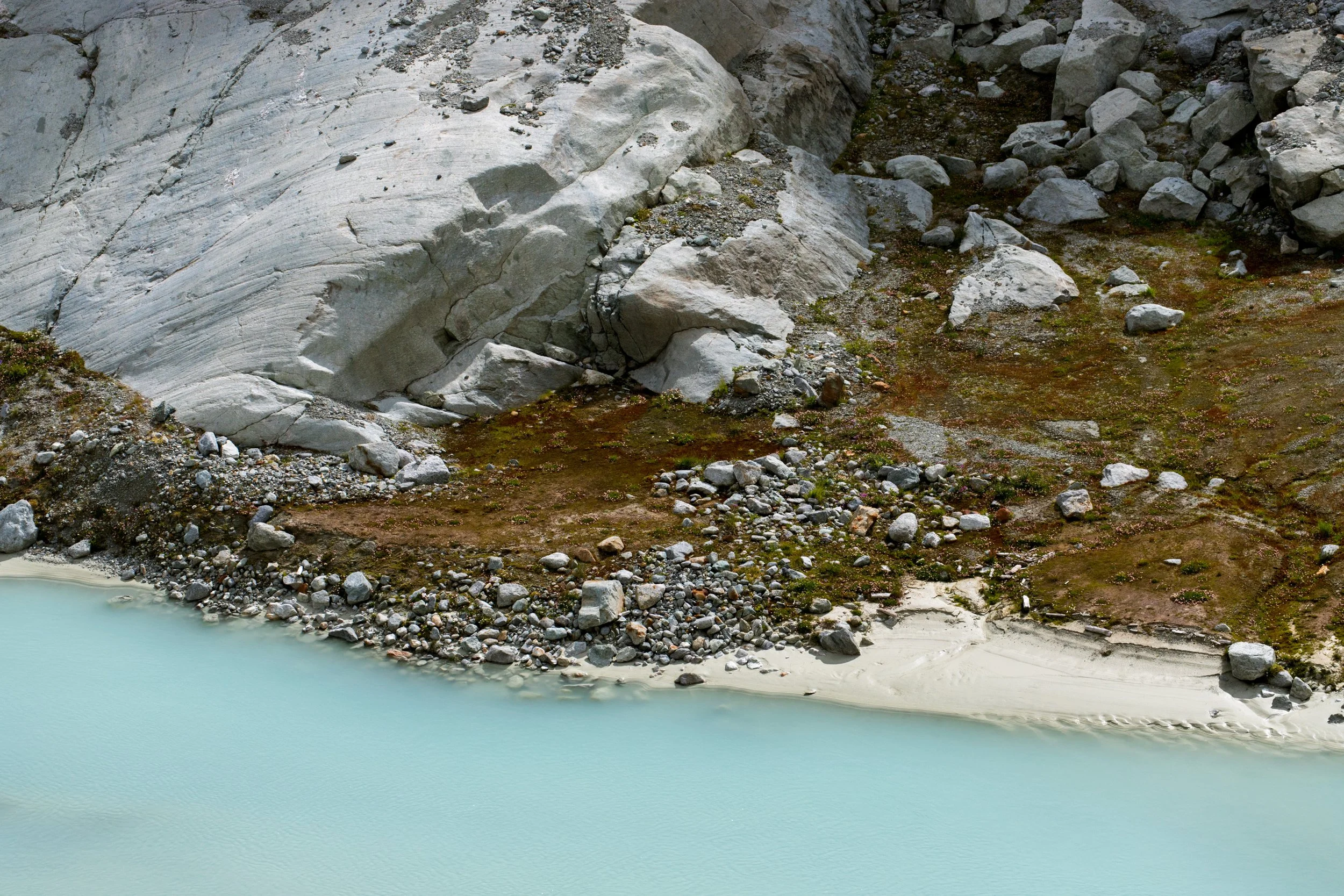
Photo by Julian Stettler.
Regardless of the value we attribute to a landscape, that value inevitably influences our perception of it. We are attracted to its aesthetic beauty. This raises the valid question of the 'appeal' of this attraction. When questioning the philosophical meaning of sensory perception, it can be observed that it is not primarily about the things one perceives, but rather about what one feels – the atmosphere. [1] The sensory perception of an atmosphere is the allure that a landscape exerts on us. This is because, as human beings and physical beings, we resonate with nature. In his book Resonance: A Sociology of the Relationship to the World, the German sociologist Hartmut Rosa describes nature as a sphere of resonance or as a resonant counterpart in the context of our modern, competitive society. By this, he means that the conceptualisation of nature as a resonant entity is a cultural achievement, as various societies have increasingly sought to separate themselves from 'nature' over time and have undergone a process of intellectual detachment from it through cultural achievements. Rosa argues that the (intellectual) alienation from nature is a loss of the ability to resonate with it. This is the true core of contemporary ecological anxiety. [2] If we consider the landscape as a sphere of resonance and the glacier as a resonating body, the loss of glaciers is not only to be understood as a loss of resources but also as a loss of an identity-forming space, with significant sociocultural importance.
The loss of glaciers due to climate warming is exemplary of the transformation of familiar natural areas. The current discussion about the urgent energy transition shows that we are socially moving through a process of transformation in which societal values and norms regarding landscapes are being renegotiated. As landscapes are altered, our value perception of them shifts. Thus, the energy transition is not only to be understood as a technological shift but also as a social and cultural one. The value of the landscape is under debate, which can open up a new approach to nature.
In the foreground of the changing or ‘estranging’ landscape, there is a growing human need for identity and individuality. The landscape, as a perceived home, becomes an important point of reference for individuals and society.
The aesthetic argument for the protection or preservation of a landscape holds symbolic power because aesthetics is constitutive of sense-making and finding a sense of home. [3] This is evident from the considerations of ecological aesthetics, which demand that aesthetics no longer merely enquire about the pure appearance of nature but also about how humans experience themselves in certain natural environments. [4] This means that the aesthetic argument is fundamentally important for spatial and temporal awareness, as individuals recognise that they are part of a world in which they exist and which influences them. Aesthetics thus triggers a process of reflection in which individuals recognise their longing for meaning and home.
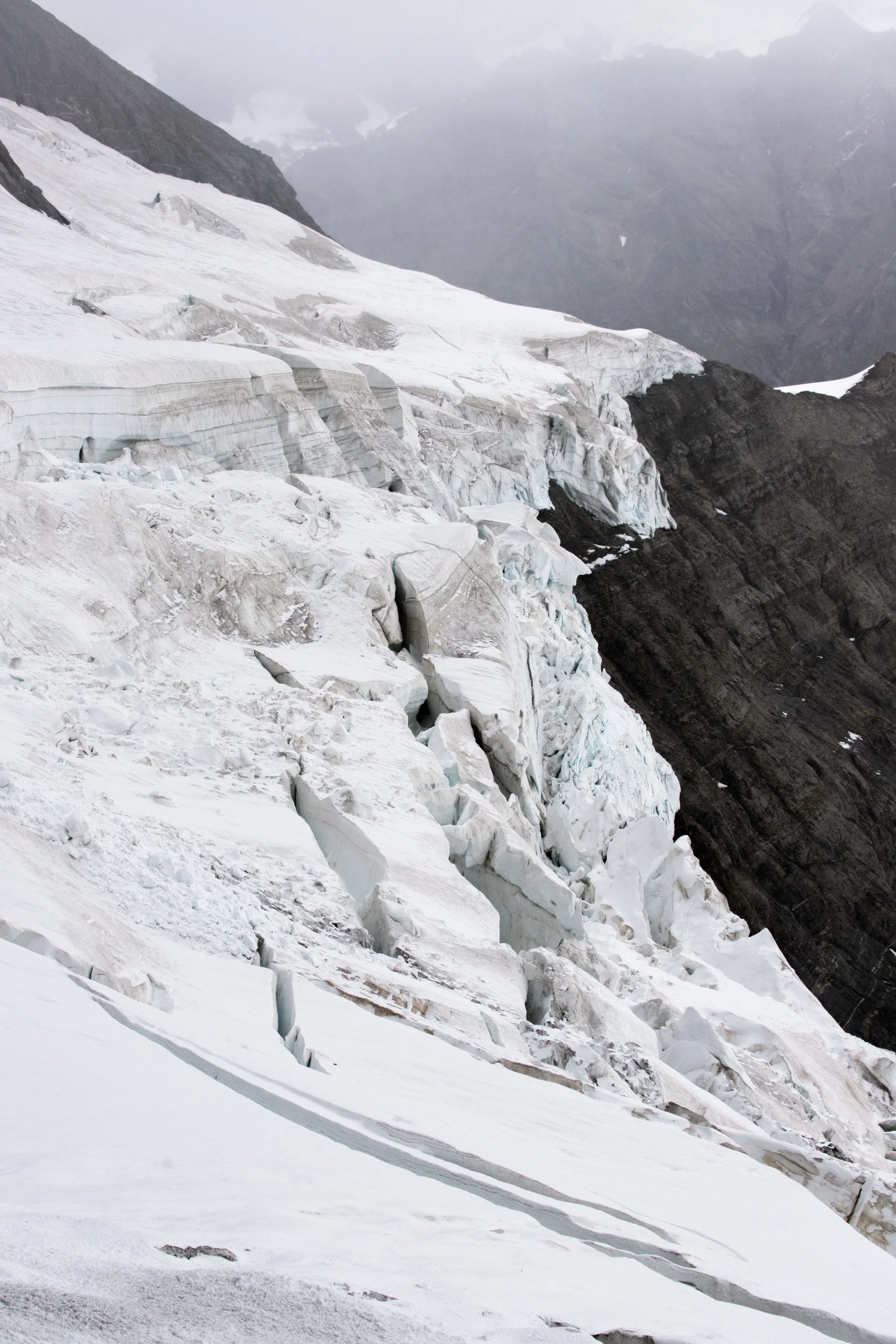
Photo by Julian Stettler.
During the industrialisation period, the perceived value of nature increased, and the concept of aesthetics was reinterpreted, which meant that the relationship between the environment and the embodied human regained significance. Today, when we speak of experiencing nature, we do so in a space that we enter deliberately, consciously leaving behind the ‘everyday space’. These spaces are landscapes with various characteristics. In other words, 'landscape' is an area as perceived by humans, whose character is the result of the effects and interactions of natural and/or human factors. [5] This means that the landscape, as a product of cultural, social, and natural effects and interactions, serves as a mediator between humans and nature. [6] Through the experience of the landscape, we connect with nature. [7] Therefore, interventions in landscapes with high natural and cultural value should be treated with care. Particularly in the Alpine region, the landscape can have a high degree of irreversibility.
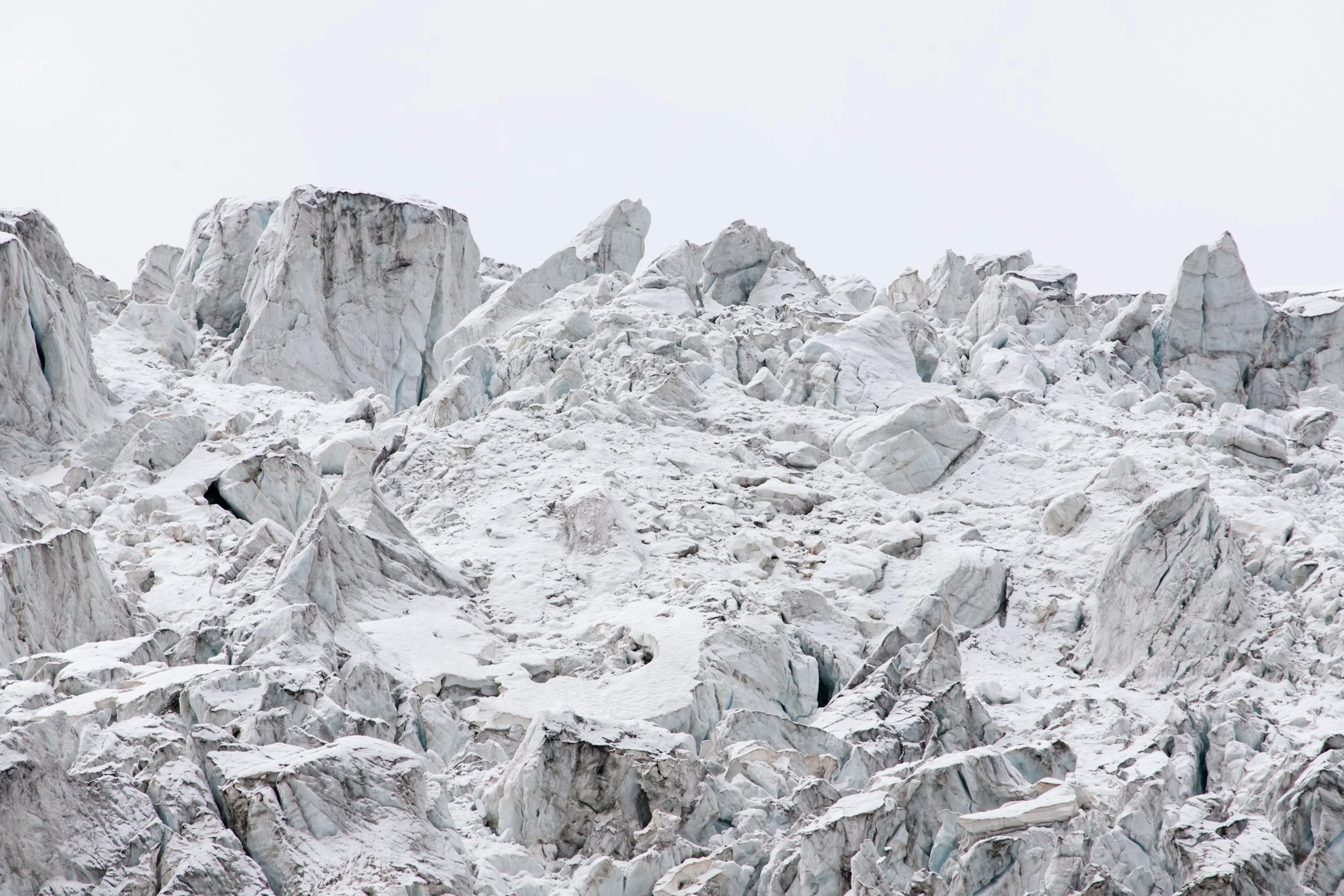
Photo by Julian Stettler.
Primordially, as embodied beings, we had direct interaction with nature. Today, there are still isolated communities living in this way. However, the majority of global society has experienced cultural change. From the bipolar relationship system, a four-part system emerged consisting of nature/individual/society/culture, with the landscape as the anthropogenic living space at its centre. [8] If we want to dissolve or halt the separation between humans and nature, then we must talk about 'landscape'. How we interpret and value it is crucial to determine the kind of relationship we want to have with nature. In recent times, the quality of a landscape has increasingly been legitimised through senses other than the visual, and this has gained acceptance in the general public and politics. It has been possible to move away from the esoteric stigma to some extent, and this is an ongoing process that is important in the phasing-in process towards a sustainable society.
References
Böhme, G., Atmosphäre. Essays zur neuen Ästhetik. Berlin: Suhrkamp Verlag, 2019, pp. 15–16.
Rosa, H., Resonanz. Eine Soziologie der Weltbeziehung. Berlin: Suhrkamp Verlag, 2021, p. 463.
Krebs, A., Das Weltbild der Igel. Naturethik einmal anders. Basel: Schwabe Verlag, 2021, p. 215.
Böhme, G., Für eine ökologische Naturästhetik. Frankfurt am Main: Suhrkamp Verlag, 1989, p. 93.
Redaktion FEDLEX, Landschaftskonvention des Europarates, 2021. Available at: https://www.fedlex.admin.ch/eli/cc/2013/329/de
Backhaus, N., Reichler, C., and Stremlow, M., Alpenlandschaften – Von der Vorstellung zur Handlung. Zürich: vdf, 2007, pp. 45–47.
Ibid., pp. 45–47.
Ibid., pp. 45–47.