Melting Treasures
How can the preciousness of a glacier be made visible and tangible in a way that is at once aesthetic and critical? This question marked the starting point of our design engagement with the disappearance of glaciers. In a speculative scenario, we simply declared glacier ice a luxury good.
The more the glaciers recede, the more precious their last remnants become. A new market emerges. The smallest fragments of glacier ice are traded for millions as exclusive pieces of jewellery. The wealthy acquire them as an investment and keep them in purpose-built freezer safes. Only on the most special occasions are the objects brought out and worn. Glacier jewellery becomes a status symbol.
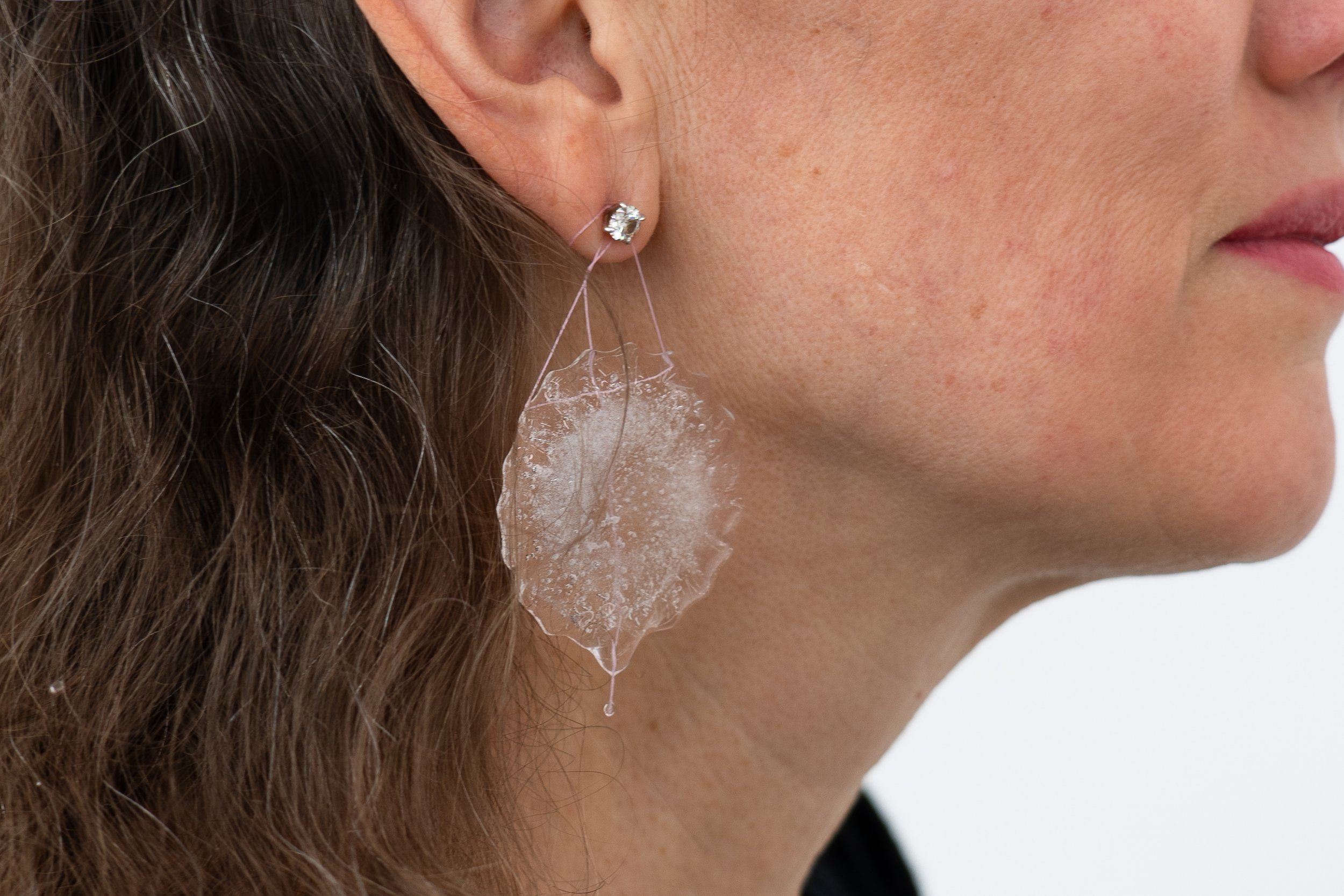
This fiction gains added urgency from a sobering fact: only around 3% of the water on Earth is freshwater, and much of it is locked away in glaciers. To own a piece of glacier-ice jewellery is therefore also to hold a private water reserve, one kept for a privileged elite. A notion as absurd as it is decadent.
‘Melting Treasures’ was created as part of the Reflect module ‘Climate, Bio-Diversity and Design’, titled ‘Glacial Beings’, at the Lucerne School of Design, Film and Art. The interdisciplinary Reflect modules invite students to explore social, cultural, and design questions experimentally. At the heart of this module lies an engagement with the retreat of the glaciers as a consequence of the human-made climate crisis.
A central concern was to perceive glaciers not merely as landscape or resource, but as living beings with whom we stand in relation. Drawing on the Latin American philosophy of life known as Buen Vivir, the idea arose to bring the ice directly to the body.
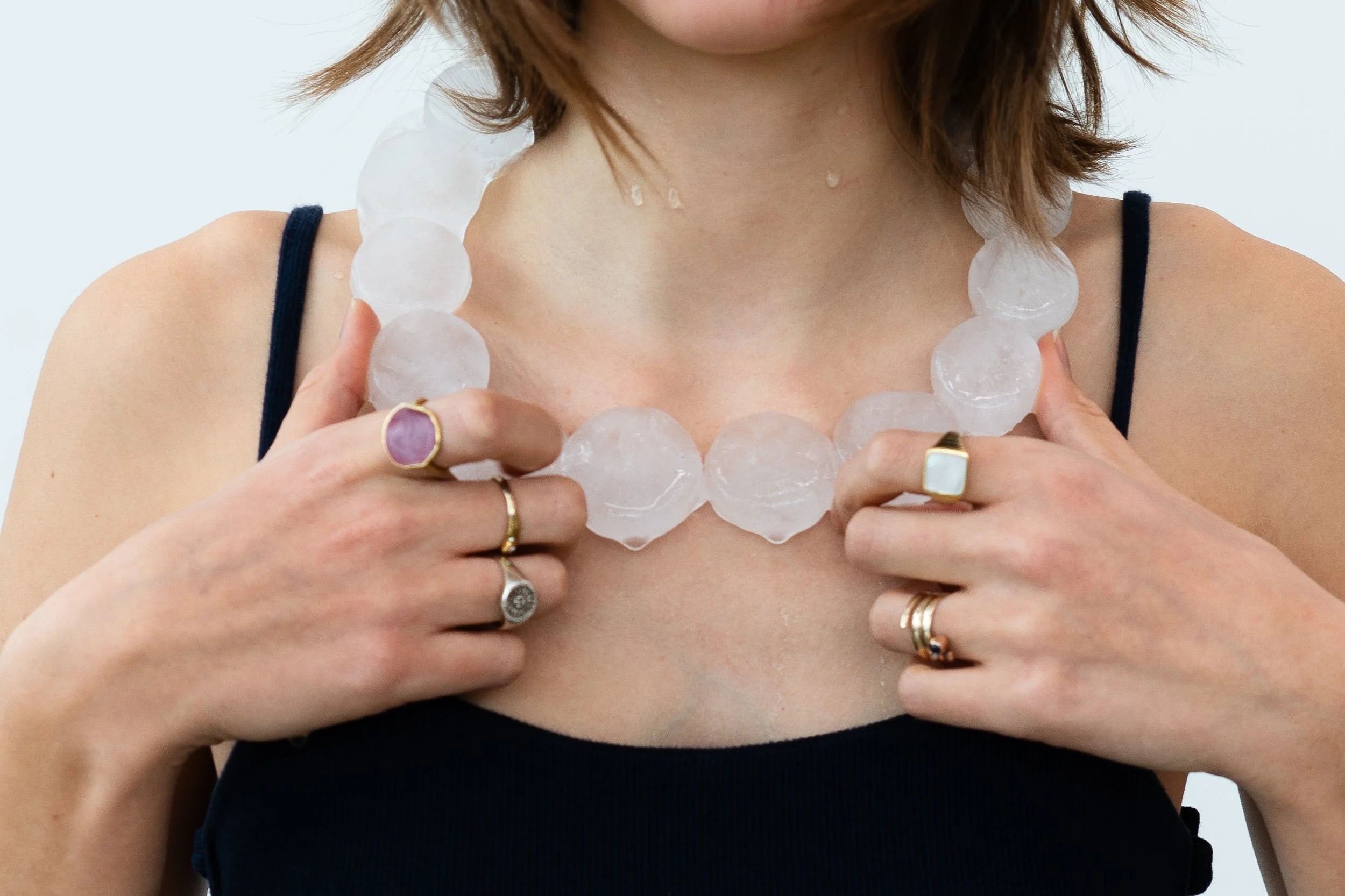
At the same time, ‘Melting Treasures’ calls our notions of jewellery and luxury into question. What if jewellery did not stand for permanence and inheritance, but drew its value precisely from its transience? To underscore the decadence of glacier jewellery, the designs draw on classical, and at times deliberately opulent, pieces. They avoid organic or naturalistic forms and instead cite the aesthetics of traditional, luxury jewellery.
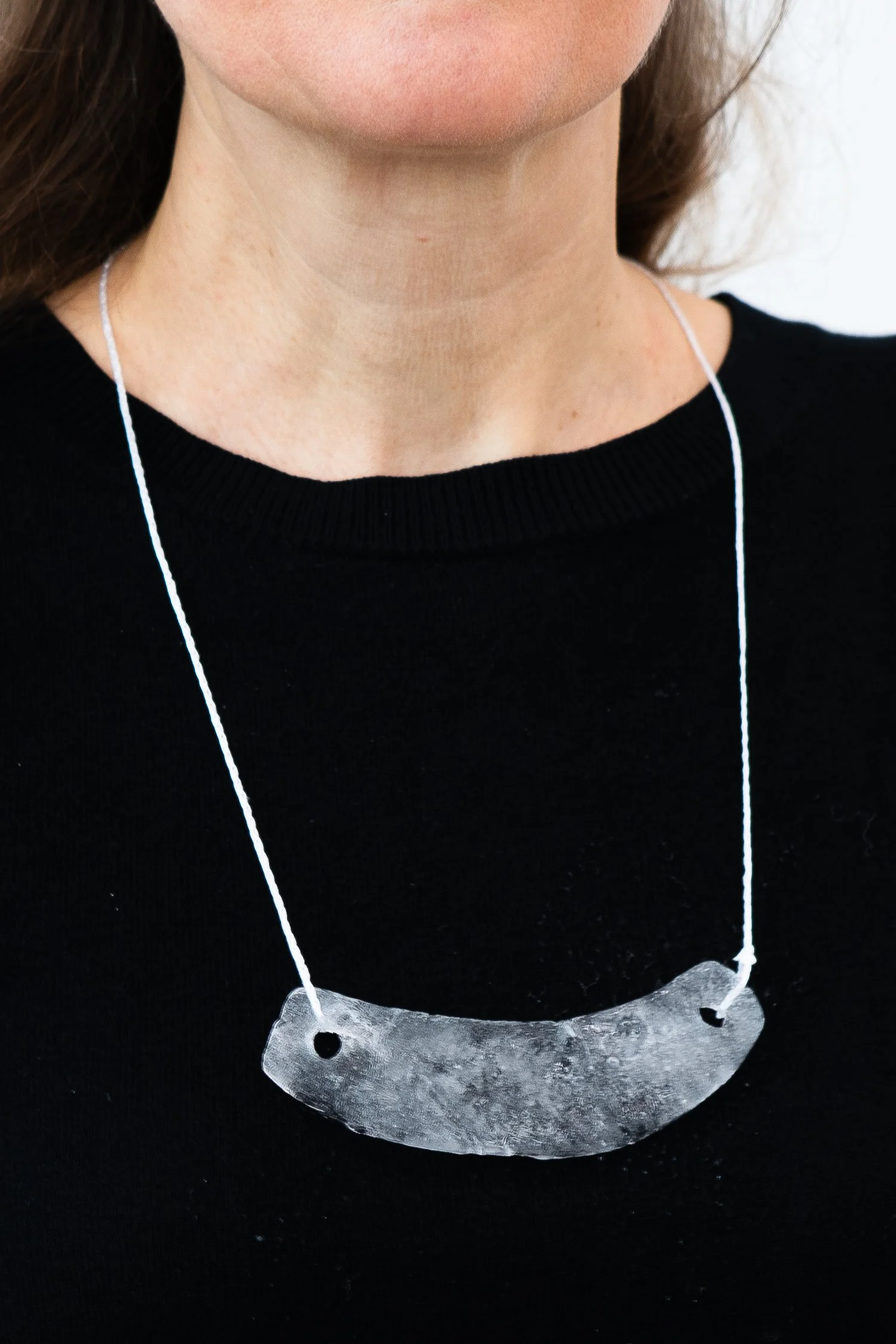
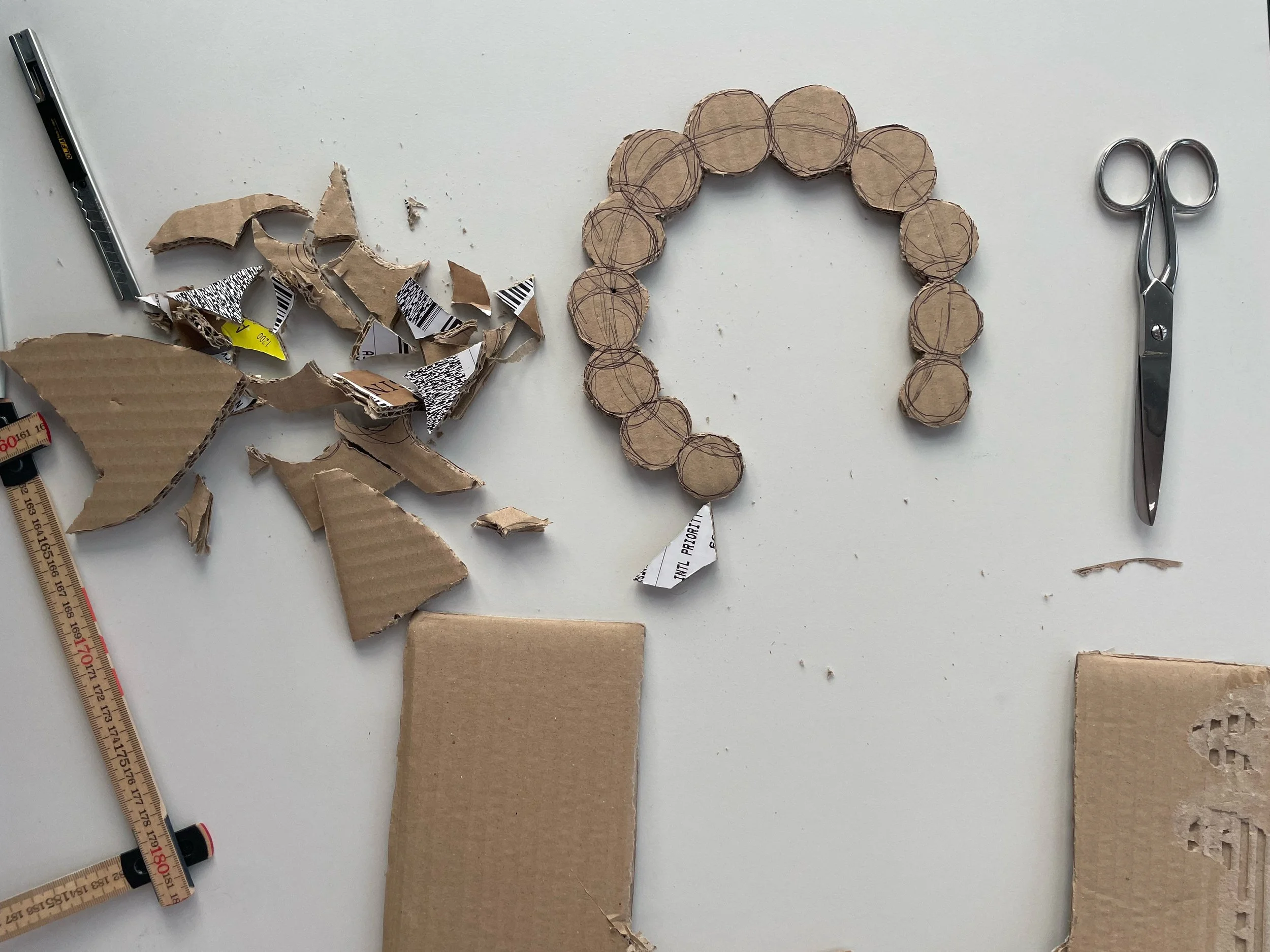
Working with ice proved as demanding as it was fascinating. The material changes constantly. It melts, slips, and remains extremely fragile. Both shaping and photographing it called for the utmost care. Meanwhile, melting was inseparable from the concept. How quickly the objects dissolved under ordinary conditions was especially striking, making the urgency of the subject immediately palpable.
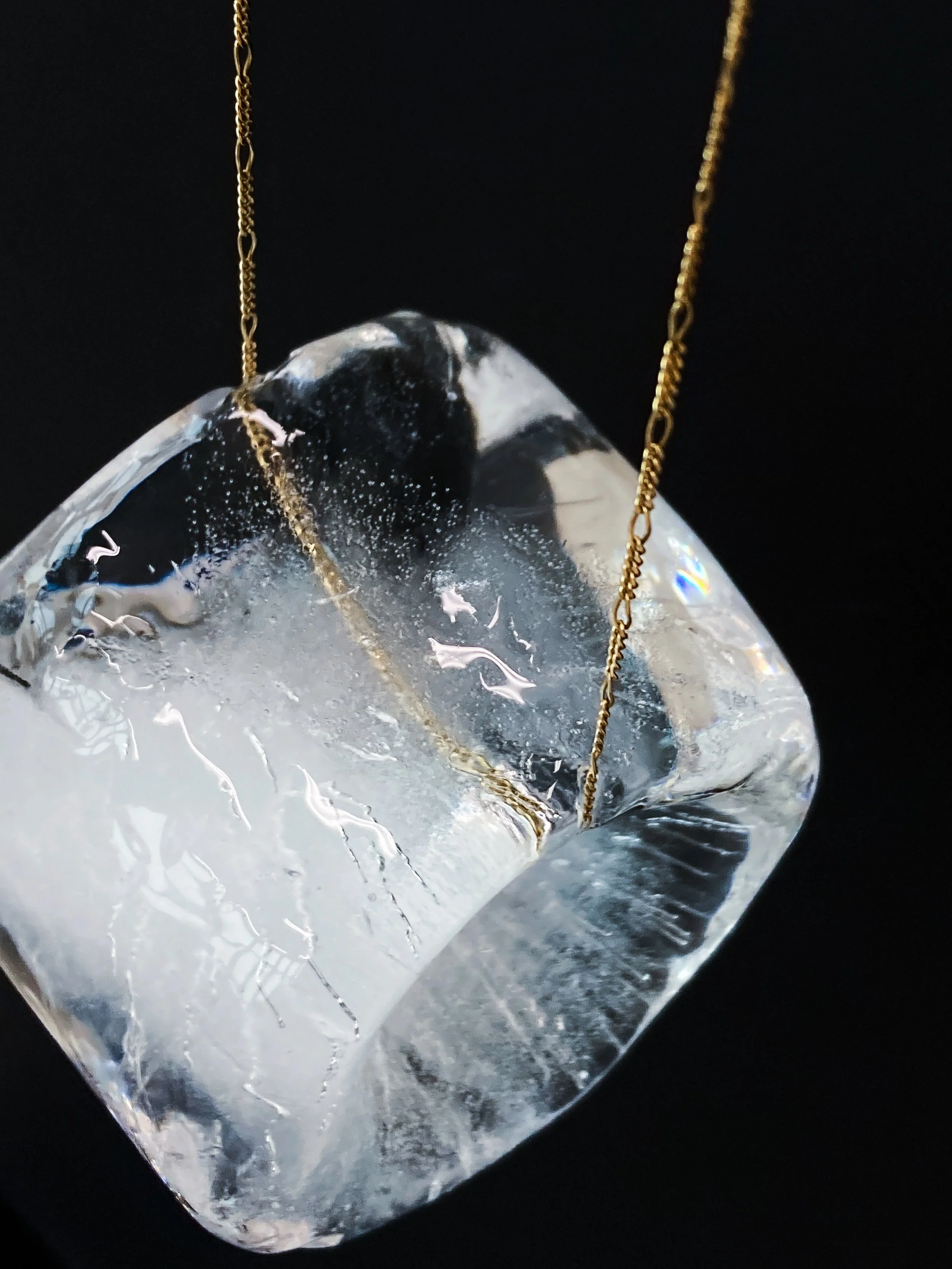
The glacier jewellery also leaves its mark on the body. Wearing it is uncomfortable. The cold hurts, and the skin reddens. Through their own body heat, the wearers experience first-hand how the ice turns to water. From the very first moment, the objects begin to change. They melt, drip, break apart, and finally vanish altogether.
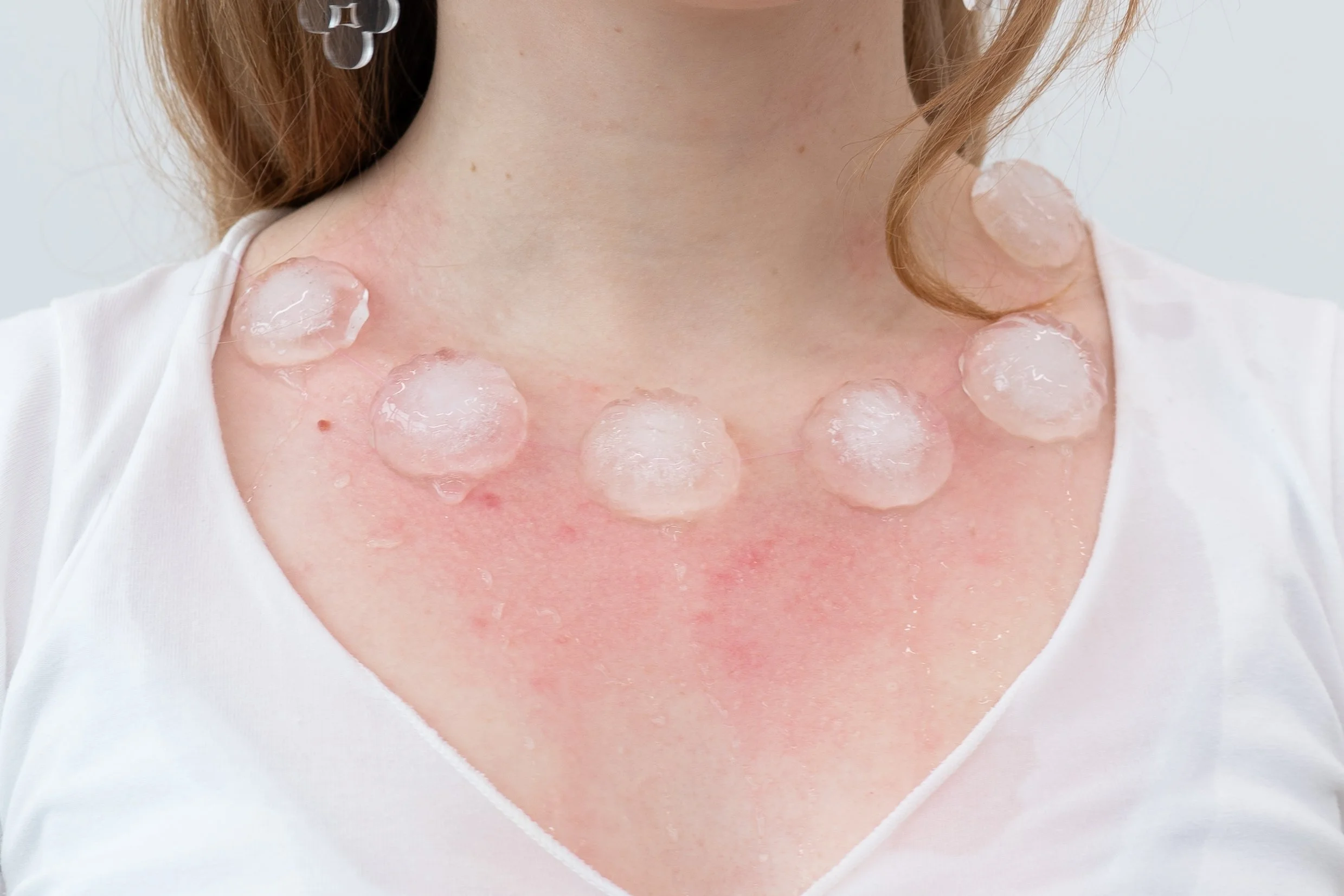
The melting glacier thus ceases to be an abstract environmental phenomenon unfolding far from our daily lives. It becomes an intimate experience of transience and loss.