Wool and Other Fellow Beings
How can we design holistically with wool? An attempt.
"The ability to control Nature, however, brings up ethical issues. By applying an anthropocentric 'filter' to what surrounds us, too often we think of Nature in terms of what it can provide for us, but not in terms of how we can contribute to it. By doing so, we are destroying our habitat faster than it can regenerate." [1] – Carole Collet
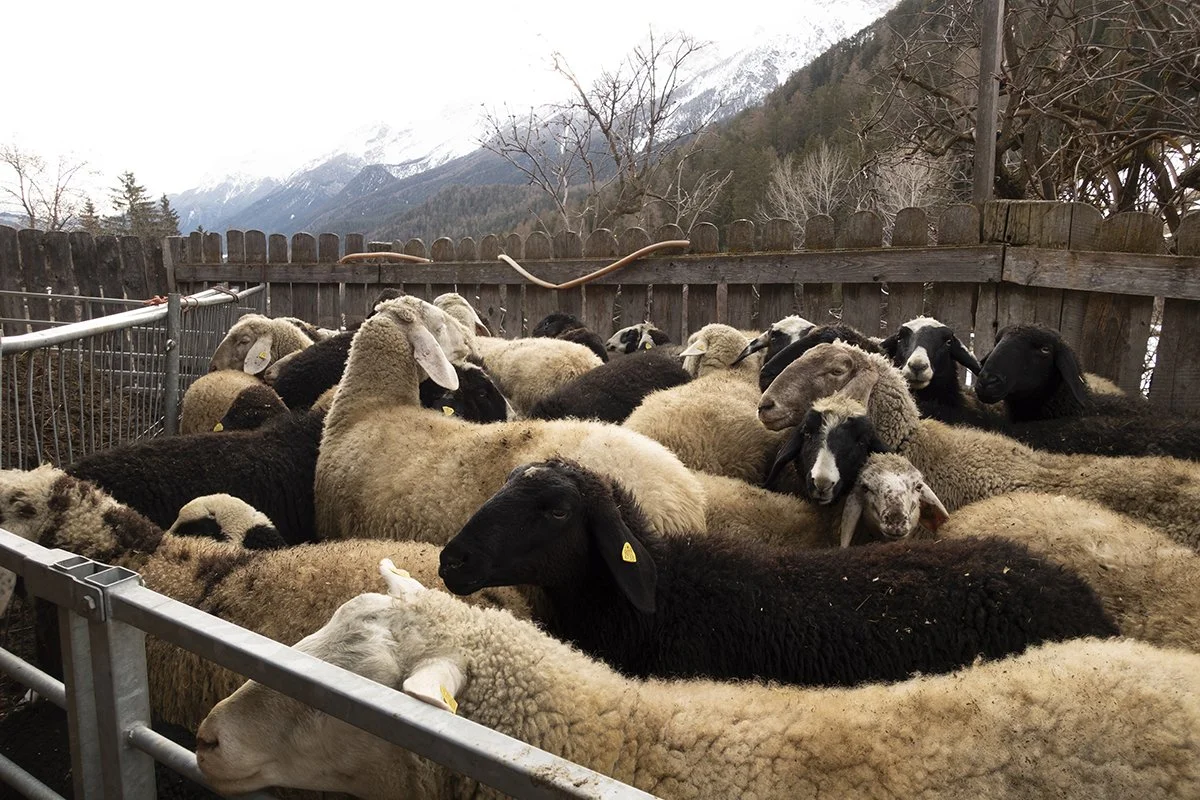
The flock in the winter barn.
As textile designer Carole Collet points out, within anthropocentric ways of thinking we have become accustomed to viewing nature as something that is useful to us. [1] The same applies to design. Nature serves as a source of raw materials, matter, and inspiration. In contrast to this anthropocentric perspective, the concept of holistic design seeks to overcome the human–nature dualism and thereby promote more sustainable forms of producing and using objects. It calls for a shift away from a capitalist and divisive way of thinking towards an understanding of the world as an interconnected whole. Within this philosophical framework, the human is no longer placed at the centre but understood as part of a larger web of relations, in which everything is interconnected. Rather than separating humans and nature, this perspective acknowledges that human beings influence nature and are, in turn, influenced by it.
In this article, I recount the journey of my Bachelor's project in Textile Design, which I completed in spring 2024 at the Lucerne School of Design, Film and Art in Switzerland. Throughout my studies, I worked extensively with wool. For me, it was a readily available material, as my father has kept sheep since my childhood. Yet I kept asking myself: How do I want to work with this material as a designer? How does my way of working shape the outcome? Can a process also be a product? With whom do I collaborate? And what kind of agency does wool possess? These questions formed the starting point of my Bachelor's project, WOLLS//CH//ICHT. [2]
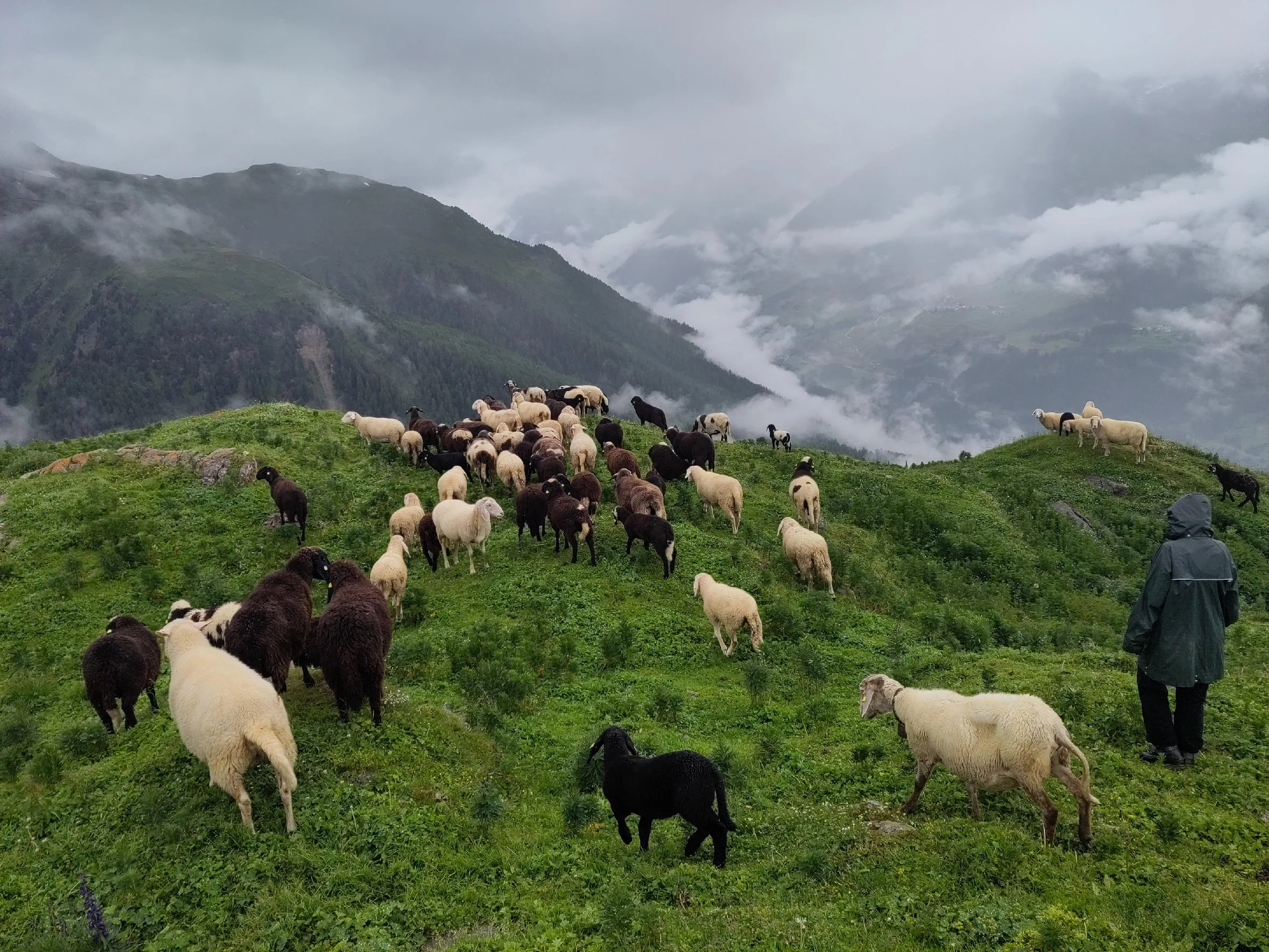
The flock on the alpine pasture in summer.
My search for answers began in the Engadin. Over the past eight summers, I have spent several weeks each year on an alpine pasture herding sheep. The gentle grazing of alpine landscapes by sheep prevents shrub encroachment and helps maintain the biodiversity of these extensive areas. Sheep farming in alpine regions therefore actively contributes to Sustainable Development Goal 15, ‘Life on Land’, particularly target 15.4, which aims to conserve mountain ecosystems. [3] Wool is considered a by-product of landscape management and meat production. The landscape, the alpine pasture, and the flock with their ewes and lambs were, and still are, very familiar to me. At the end of March 2024, I returned there to assist with shearing. The following day, I travelled back to the lowlands with a large sack of wool and began a series of experiments for my Bachelor's project.
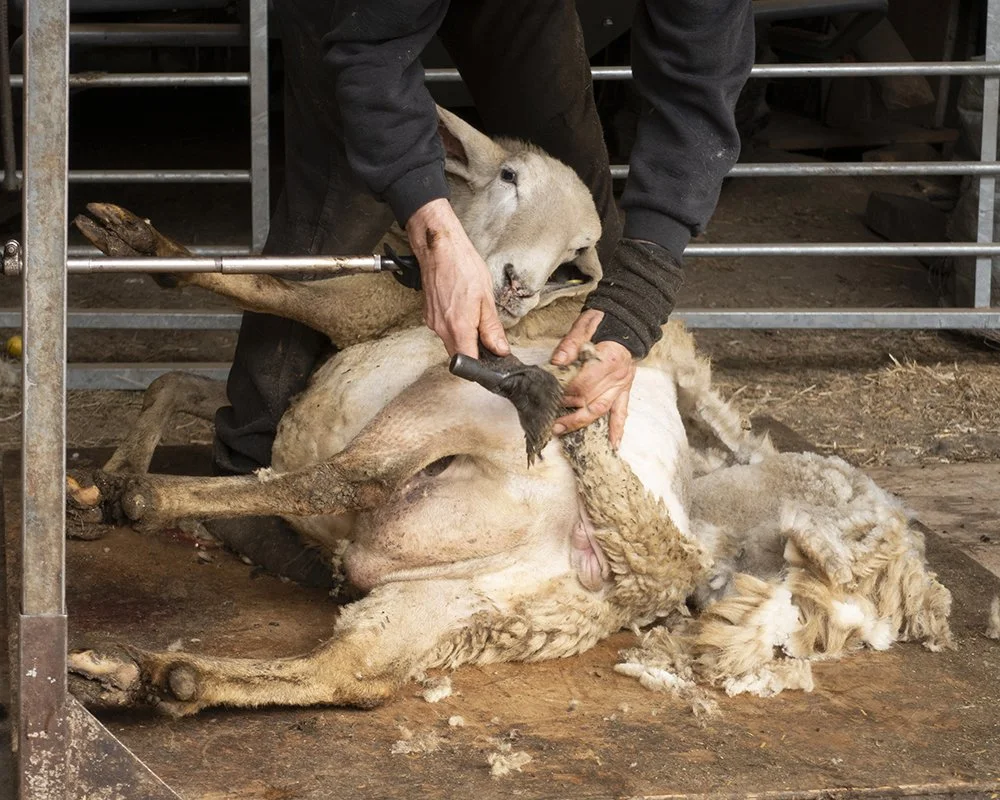
Sheep shearing in spring.
Throughout this process, I understood both myself and my work as part of a relational network. The design process unfolded in, with, and for the surrounding environment. Snow, rainwater, a river, the sun, and other natural forces acted as co-designers. From this process, several insights emerged that allowed me to engage in a regenerative collaboration with the more-than-human world:
Connecting myself with the natural world means working with what surrounds me and allowing other beings to participate in the design process.
Understanding time as a cycle means working in rhythm with the more-than-human world, embracing the unexpected, enduring apparent inactivity or changes that are not immediately visible, and observing the changes that unfold over time.
Creating cycles means working for the living world and giving something back to other beings.
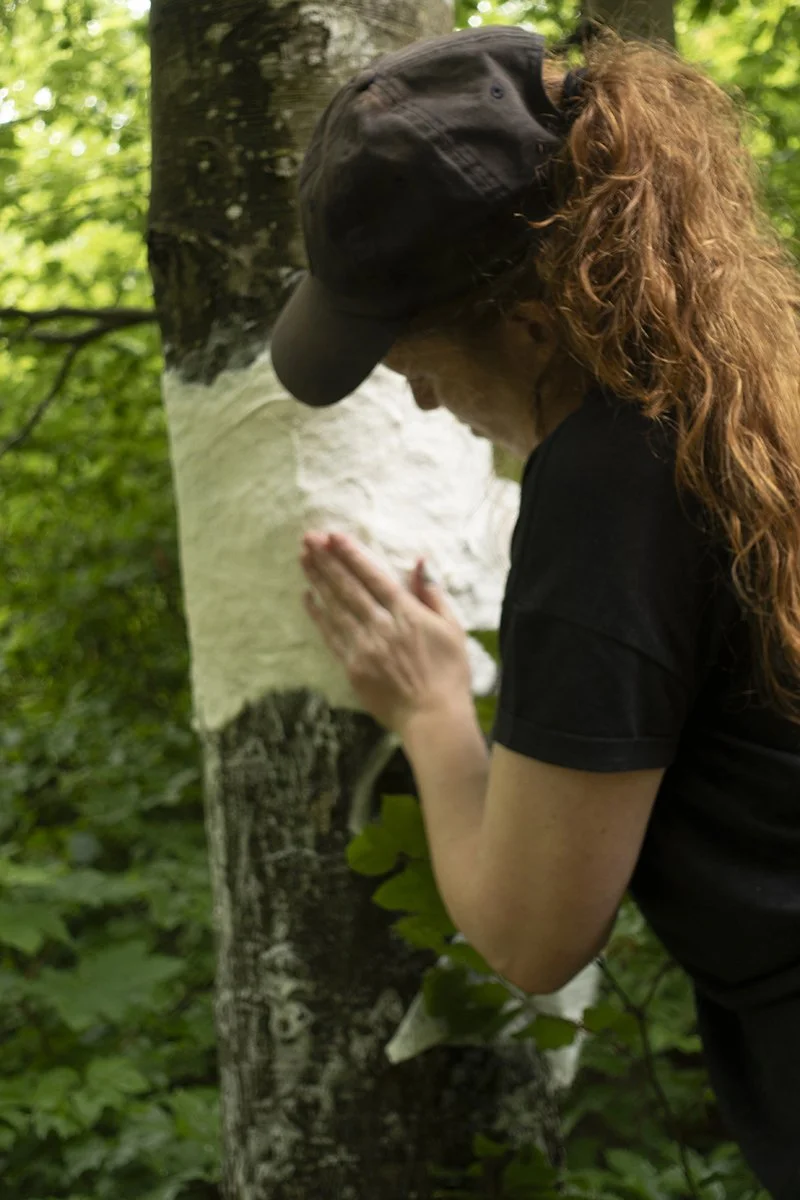
Connecting bodies through felting.
Time played a crucial role in my work. I had to complete my Bachelor's project within an academic timeframe, regardless of the influences of fellow beings. Yet these were precisely the influences I wanted to work with. I became increasingly aware of the seasonality of the beings around us, as well as of wool itself, since sheep are shorn twice a year. Within an anthropocentric understanding, time is conceived as a linear construct, with a clear beginning and end to the lifespan of a product. However, if we as designers begin to understand time as cyclical, we can rethink and reshape our processes.
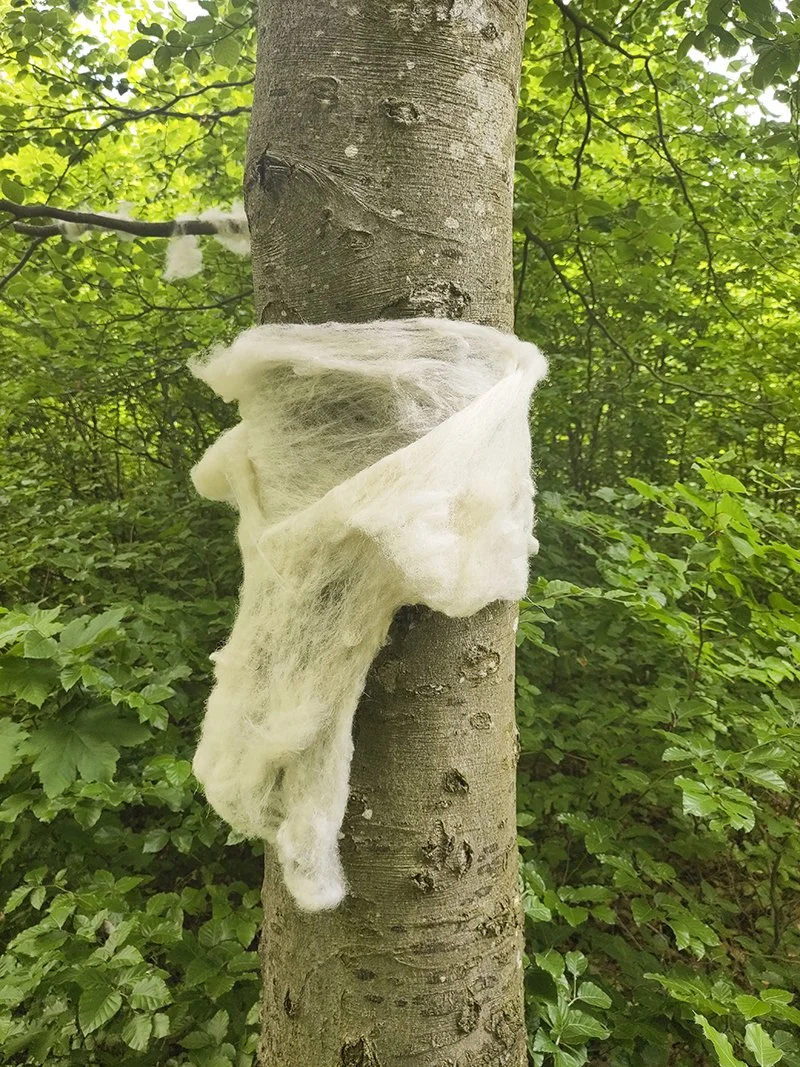
Felt on the body.
Particularly when working with natural materials, it makes sense to attune ourselves to the rhythms of the living world. Fibres are always agricultural products and are subject to more-than-human influences such as drought, humidity, and temperature. Under changing conditions, it is not always possible to produce the same quantity with the same quality. Time, however, is also a design factor. Every natural or bio-fabricated material undergoes a process of ageing that lastingly influences the design. When time is understood in relation to design as cyclical, a product passes through different phases. After its phase of use comes a phase of return, during which the material re-enters the biological cycle. In this way, energy is preserved and continuously transformed.
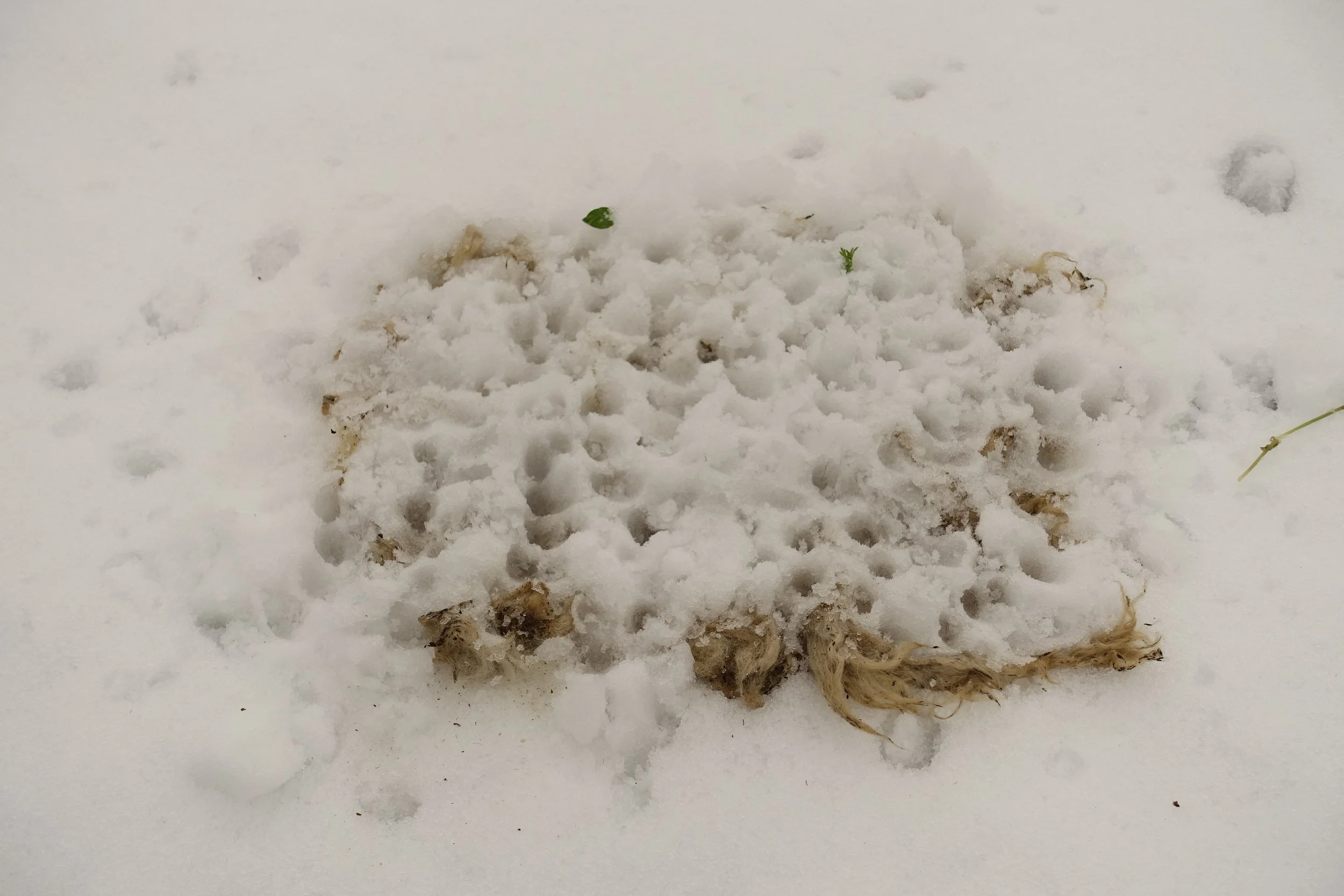
Co-creation with wool and snow.
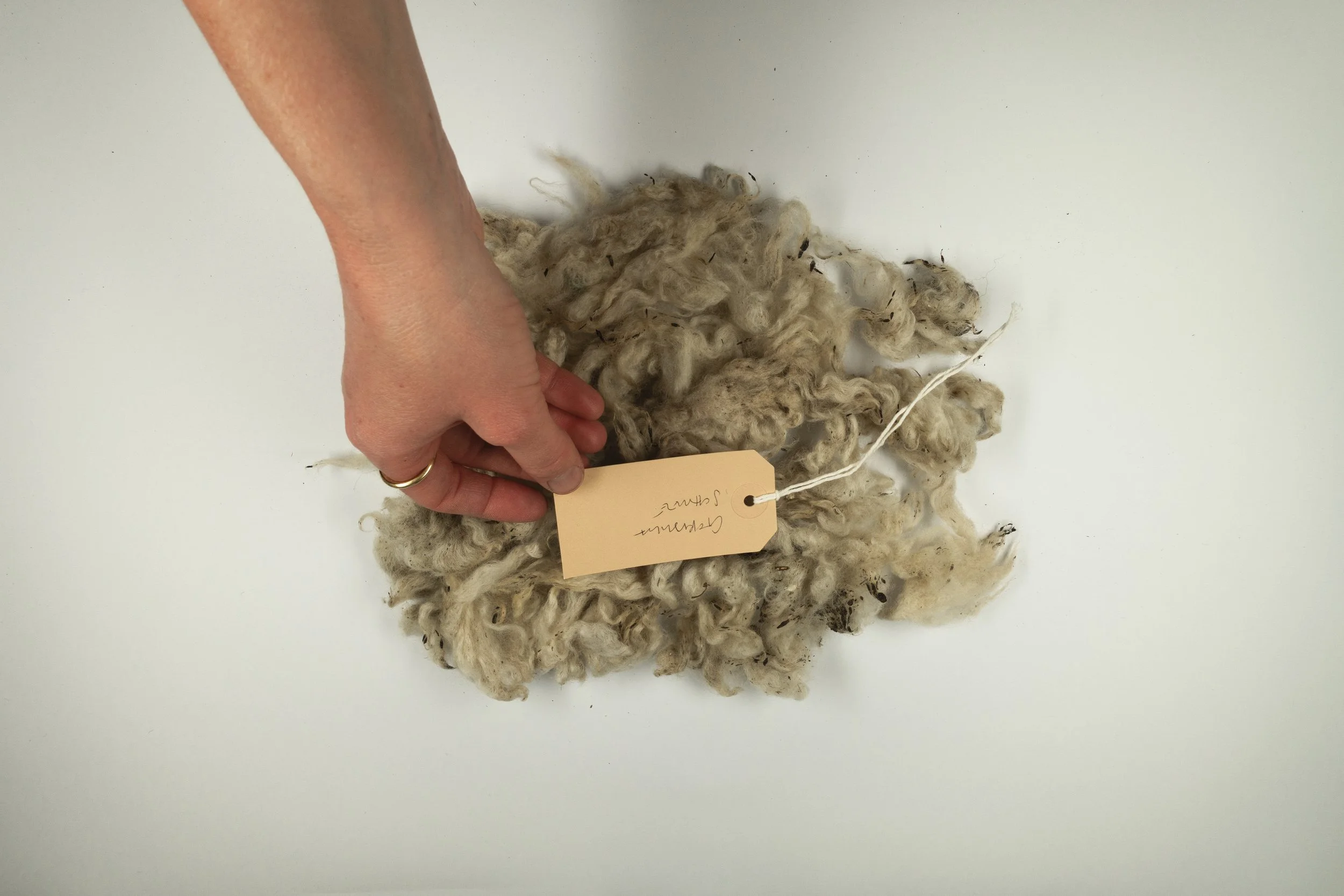
Wool cleaned with the help of snow.
For me as a designer, this means establishing a personal connection with the more-than-human world in order to better understand these interrelations. During the period of my project, for example, I often worked with poppies, simply because they were growing abundantly in my garden at the time. This, however, was due to the large areas of exposed soil, which poppies particularly favour. When working with natural materials, it was essential to understand the processes of the more-than-human world, and to align my design process accordingly.
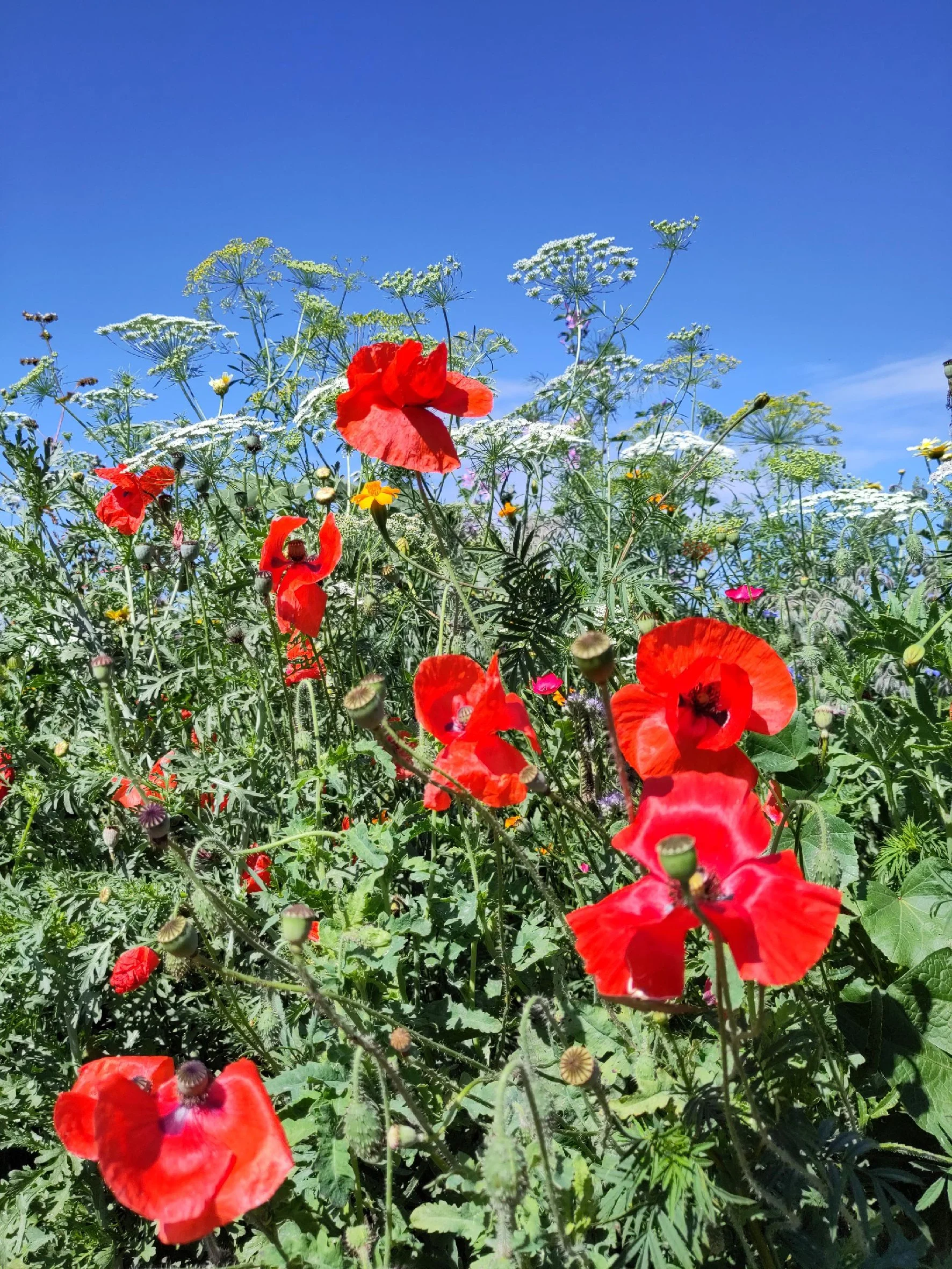
Poppies as fellow beings.
Working in rhythm with the larger living system means planning over longer periods of time and conceiving projects with a long-term perspective, experiencing the cycle of the seasons several times, if necessary.
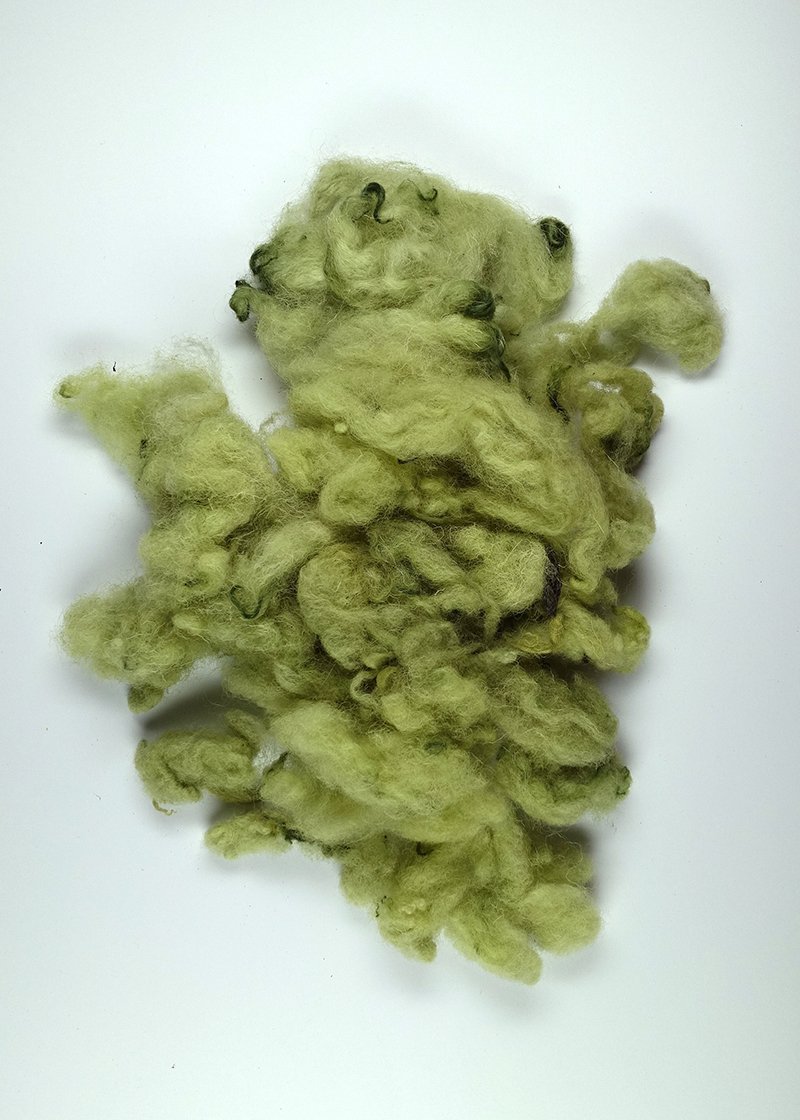
Dyed wool.
It also requires embracing processuality and the unexpected, as well as observing, accommodating, and reflecting upon what unfolds. As designers, it is important to understand the cultivation and production methods associated with a given material in order to grasp the reach of our own decisions and to act locally.
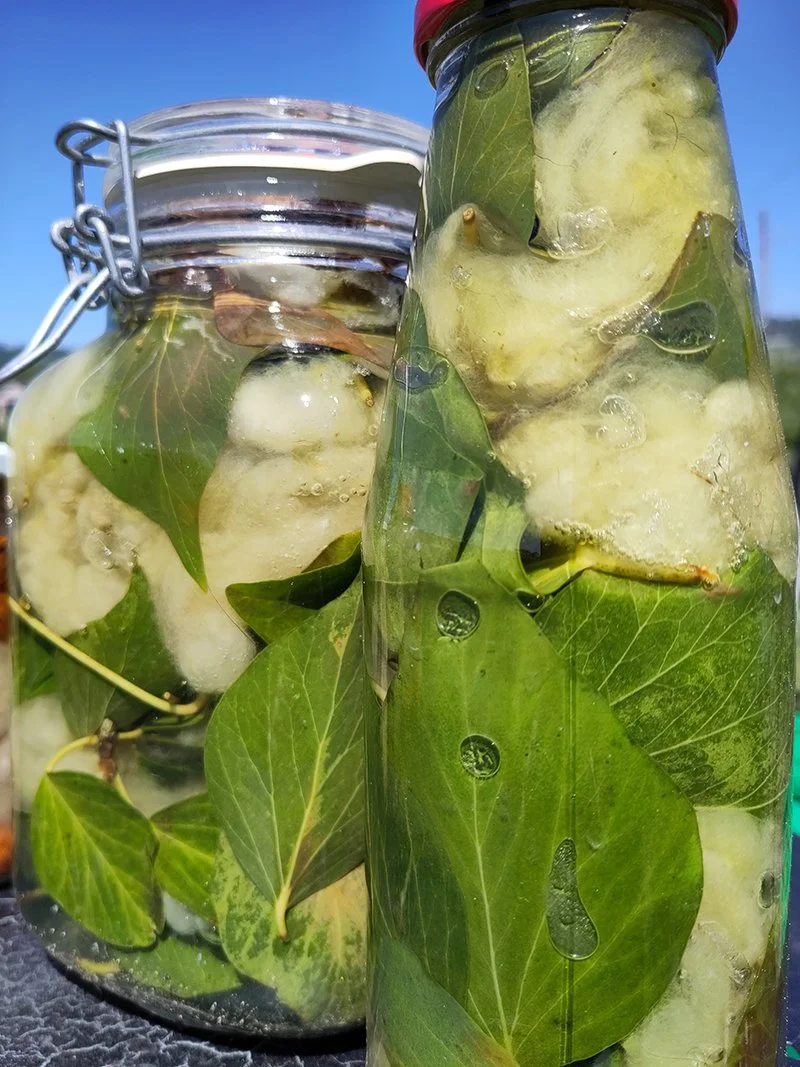
Dyeing wool with the help of ivy, sunlight and rainwater.
Original German text by Livia Irina Schlup
Translated into English by the author with the assistance of ChatGPT (OpenAI).
Notes
Laura Drouet and Olivier Lacrouts, eds., Plant Fever (Hornu, Belgium: CID – Centre d'Innovation et de Design, 2020), 173.
WOLLSICHT (German) = View on Wool // WOLLSCHICHT (German) = Wool as a layer
United Nations, Sustainable Development Goal 15: Targets and Indicators. Available at: https://sdgs.un.org/goals/goal15#targets_and_indicators